Canadian dentistry operates under a particular set of pressures. Provincial regulation, federal privacy legislation, fragmented insurance pathways, and rising patient expectations all converge on a single point in the working day: the practice management system. When that system is well chosen, the administrative burden recedes and clinical attention is preserved. When it is poorly chosen, the cost is measured not only in lost revenue but in compromised continuity of care.
The argument that follows is not a product manifesto. It is an examination of what a credible practice management platform should deliver for Canadian dental clinics, with reference to the operational realities most practices already recognise. GoodX is offered here as a working example of how those criteria can be satisfied in a single integrated environment.
Scheduling as Operational Infrastructure
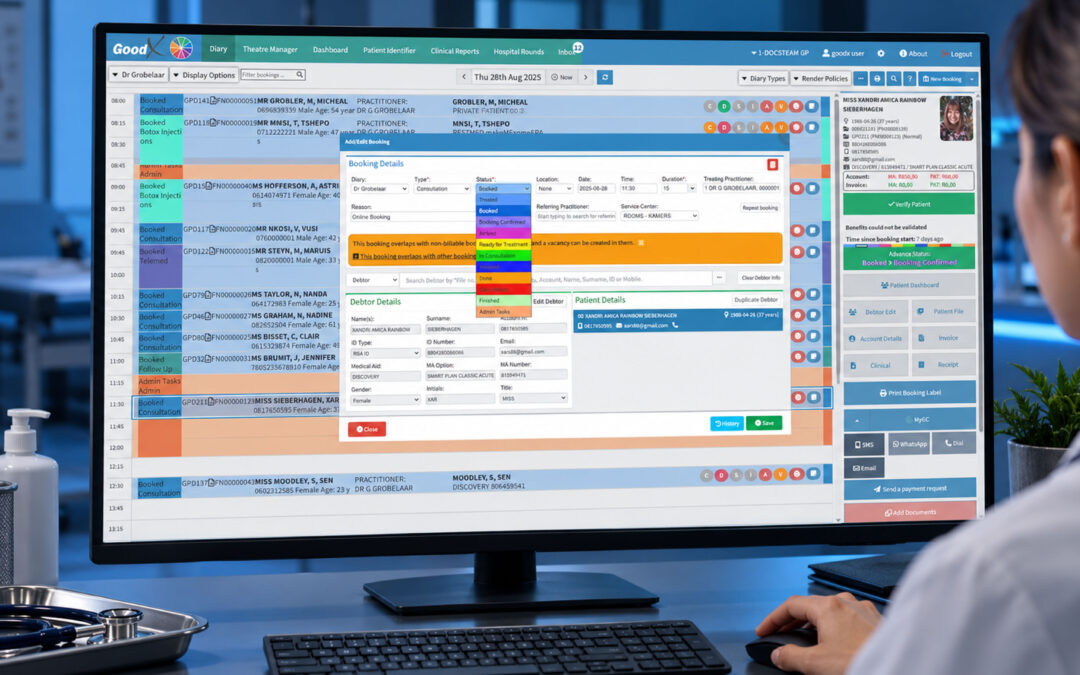
Scheduling is rarely treated as the clinical infrastructure it is. The appointment book sets the pace of the day, governs chair utilisation, and determines whether the practice meets its revenue targets without burning out the team. A real-time scheduling engine, by which I mean one that updates the moment a cancellation occurs or a slot is reallocated, removes the structural cause of double bookings rather than merely flagging them after the fact.
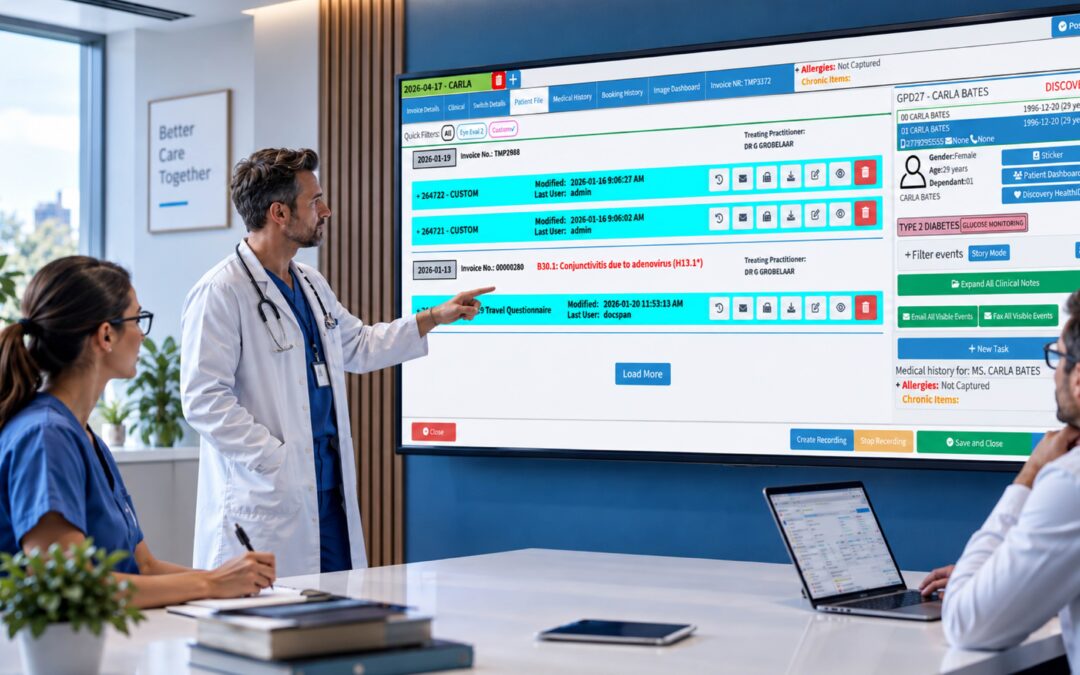
Within GoodX, the schedule communicates directly with the billing ledger. A failed appointment is recorded as a financial event rather than a footnote, which permits more accurate recall workflows and a defensible audit trail. Guidance from the Canadian Dental Association on practice management consistently emphasises the importance of coherent documentation across appointment, treatment, and billing records, and this is the structure such guidance implies.
Clinical Documentation Without Cognitive Tax
Electronic medical records have a long history of well-documented usability problems. Excessive click depth, inconsistent navigation, and modal overload contribute to documentation fatigue, which is itself associated with reduced note quality and increased after-hours charting.
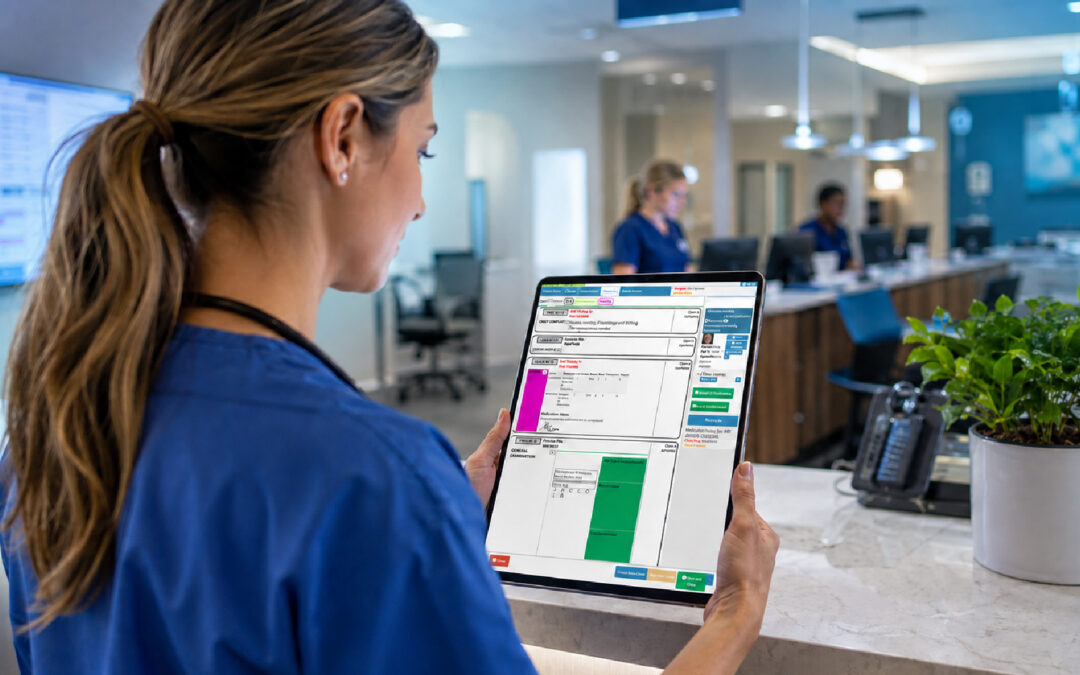
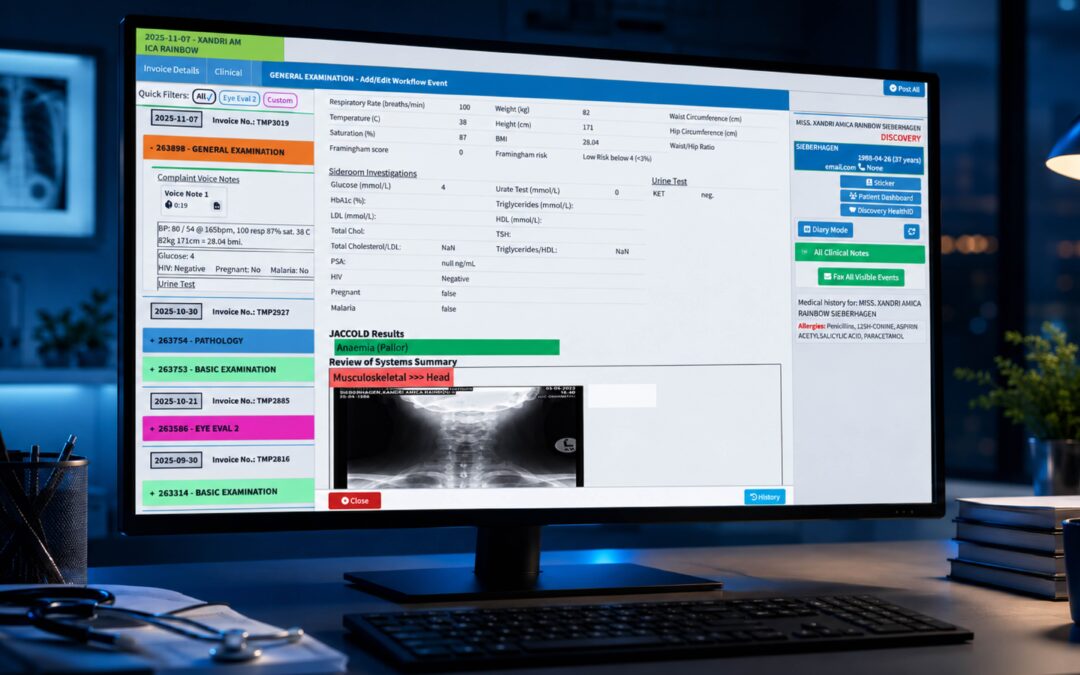
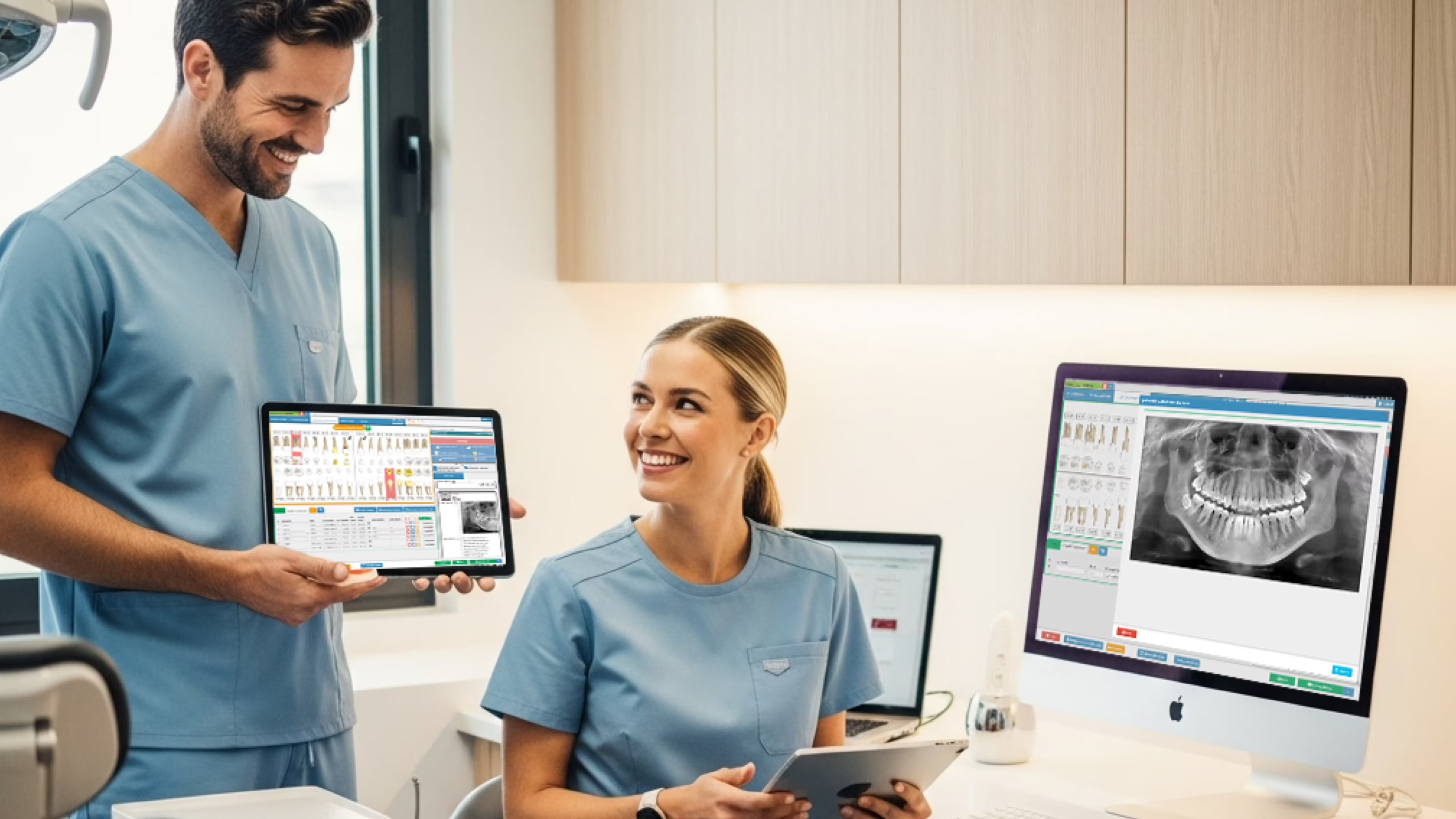
The GoodX EMR addresses this through a flat charting hierarchy. Treatment plans, tooth charting, clinical history, prescriptions, and imaging are accessible from a single patient view. The principle is straightforward: documentation should follow the clinical encounter, not interrupt it.
Billing, Claims and the Revenue Cycle
Revenue cycle management in Canadian dentistry is complicated by the coexistence of direct patient billing, private insurance, and an expanding federal layer through the Canadian Dental Care Plan. A practice management system must therefore validate claims at the point of entry rather than at the point of submission, where errors are more expensive to correct.
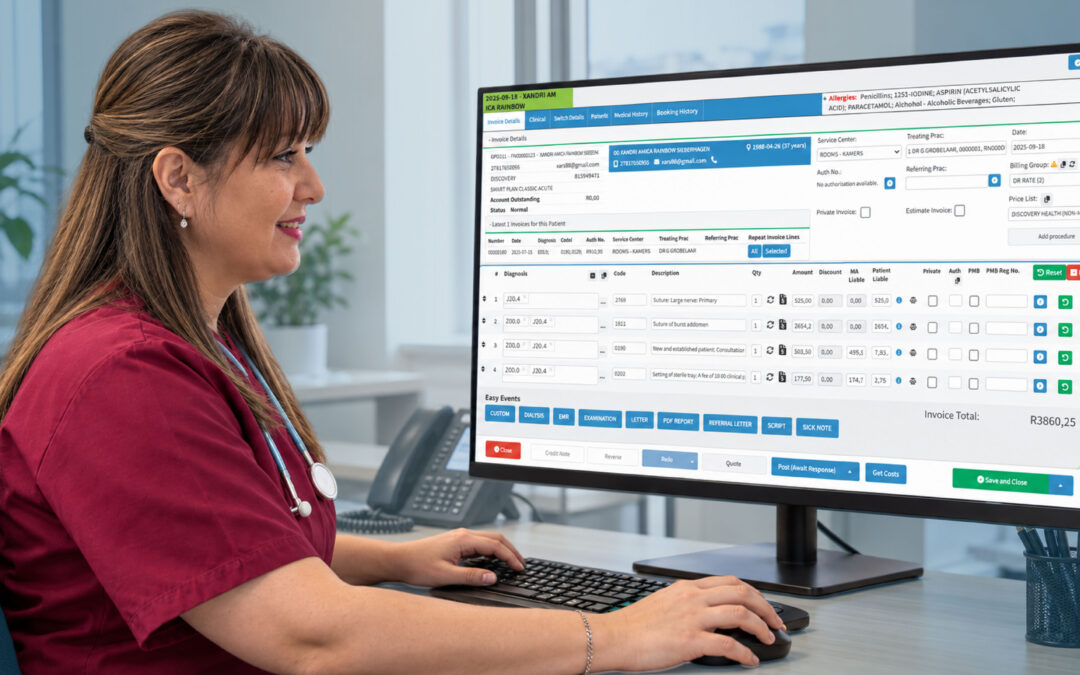
GoodX performs pre-submission validation, flags missing claim data, and reconciles payments against the patient ledger as they are received. Integrations with Moneris and Stripe support point-of-service payments, and CDAnet connectivity is in active development. Historic invoices and statements remain searchable, which is consequential when a patient or insurer raises a query several months after the fact.
Information Security and Statutory Compliance
A dental practice is, in legal terms, a custodian of sensitive personal health information. The applicable framework in Canada is the Personal Information Protection and Electronic Documents Act, supplemented by provincial health information statutes. The Office of the Privacy Commissioner of Canada provides the authoritative guidance on PIPEDA obligations, and any practice management platform handling Canadian patient data should be capable of evidencing alignment with those obligations.
GoodX is certified to ISO/IEC 27001, the international standard for information security management systems, and operates under ISO 9001 quality management protocols. The practical implementation includes role-based access control, full audit logging, encryption of data both in transit and at rest, and structured retention policies. These are not marketing categories. They are the controls a privacy officer is required to verify, and their presence materially shortens the conversation when due diligence is conducted.
Patient Communication as Continuity of Care
Patient adherence to recall schedules, pre-appointment instructions, and post-operative care is influenced by the quality and timing of communication. GoodX consolidates SMS, email, and patient portal messaging into a single thread tied to the patient record. The clinical and administrative team therefore work from a complete communication history rather than reconstructing it from disparate channels.
Automated workflows handle appointment confirmations, recall reminders, and the distribution of pre-visit forms. The automation reduces administrative load without removing the clinician’s discretion to intervene where a patient requires personal contact.
Digital Intake and Form Management
The displacement of paper intake forms by digital equivalents is now well established. The relevant question is no longer whether to digitise but how cleanly the captured data integrates with the patient record. GoodX permits practices to design custom forms, dispatch them ahead of the appointment, and receive structured responses that populate the file automatically.
The administrative benefit is obvious. The clinical benefit, which is less often discussed, is that medical history and consent documentation arrive complete and legible before the patient is seated.
Reporting and Practice Intelligence
Operational decision-making in a dental practice benefits from accessible, current data rather than retrospective monthly reports. The GoodX dashboard provides real-time visibility of appointment density, no-show rate, outstanding claims, provider productivity, and revenue distribution by treatment category. The intent is interpretive immediacy: the practice manager identifies a variance and acts on it within the same working day.
Continuity of Service Through Connectivity Disruption
Internet outages remain a practical reality in regions of Canada where rural and remote coverage is uneven. A practice management platform that fails entirely under such conditions is operationally fragile. The GoodX mobile web application preserves access to appointment information and core charting functions during periods of disconnection, and synchronises automatically once connectivity is restored.
Integration with the Canadian Workflow Ecosystem
A practice management system does not operate in isolation. It must interoperate with payment processors, laboratories, electronic referrals, fax-to-email services, and, where applicable, provincial billing channels. GoodX maintains a published integration roadmap rather than a closed ecosystem, which permits the practice to retain established vendor relationships rather than absorb the cost of wholesale replacement.
Implementation, Migration and Local Support
The migration from a legacy system is the point at which most software transitions falter. Data integrity, staff training, and operational continuity must be preserved simultaneously. GoodX provides a local onboarding team responsible for record migration, workflow configuration, and staff training, with continuing support available after go-live. Response times are measured in hours, not in indefinite queue positions, which is the relevant metric for a clinic that cannot suspend operations while waiting for assistance.
Scalability Across Practice Models
The platform supports solo practitioners, multi-provider clinics, and multi-location groups within a single architecture. Capacity expansion, the addition of locations, and the configuration of role-based permissions are administrative tasks rather than migration events. The practical implication is that a growing practice does not face a forced re-platforming at the point of expansion.
Conclusion
The case for any practice management platform must rest on more than its feature list. It must demonstrate that the system reduces administrative friction, supports statutory compliance, integrates with the broader Canadian dental ecosystem, and preserves the clinician’s attention for clinical work. On those criteria, GoodX offers a coherent and defensible answer for Canadian dental practices considering renewal of their core operational software.