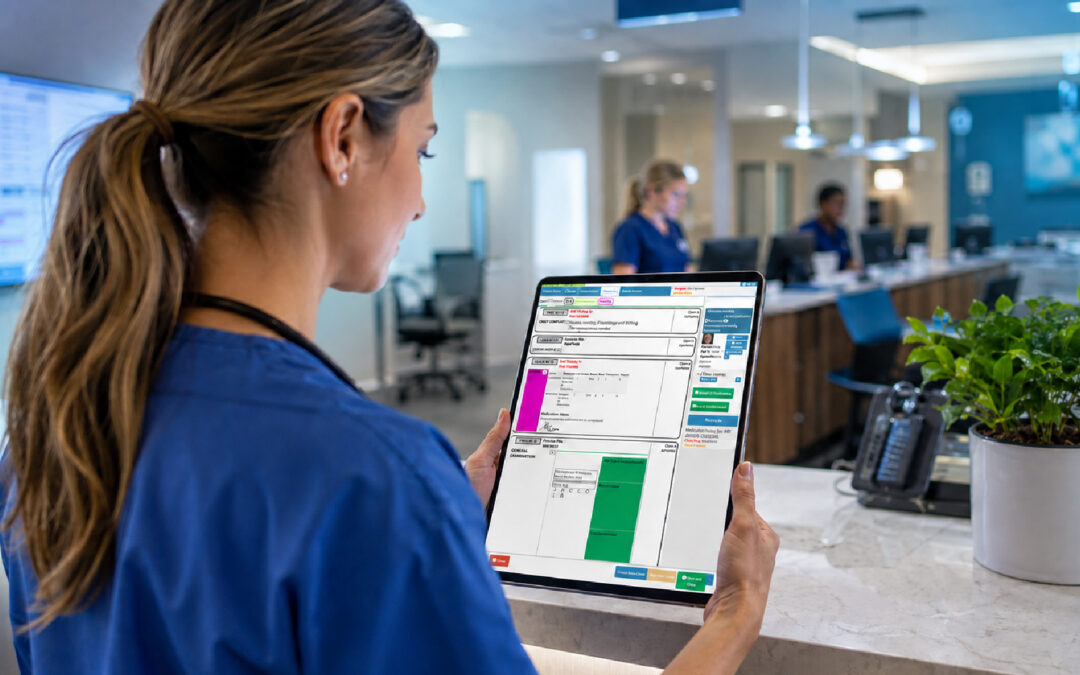
Ophthalmology is one of the most technologically intensive medical specialties. Canadian eye care practices handle a complex mix of diagnostic imaging, surgical scheduling, optical dispensing, and ongoing chronic disease management for conditions like glaucoma and macular degeneration. The administrative demands that accompany this clinical complexity make practice management software essential for modern Canadian ophthalmology programs.
This complexity extends beyond the clinical realm: scheduling pre-operative assessments alongside post-surgical follow-ups, managing multiple diagnostic devices, coordinating with optical dispensaries, and maintaining detailed patient records that track longitudinal outcomes all require systematic, purpose-built solutions. Without the right software infrastructure, even high-performing clinical teams struggle with administrative bottlenecks that ultimately impact patient care and practice profitability.
Best Ophthalmology Programs in Canada: The Growing Need for Specialised Software
What Makes Ophthalmology Administration Unique
Ophthalmology practices have specific administrative needs that differ significantly from general practice. Multi-step appointment types such as pre-operative assessments, post-surgical follow-ups, and orthoptic sessions create a scheduling environment far more complex than primary care. These are not simple one-off visits; they form part of coordinated clinical pathways that must align with operating theatre schedules, diagnostic imaging availability, and specialist staff rotations.
Integration with diagnostic equipment represents another layer of administrative challenge. Optical Coherence Tomography (OCT) machines, visual field analysers, fundus cameras, and A-scan biometers generate detailed patient data that must flow seamlessly into clinical records. Manual data entry is not only time-consuming but introduces the risk of transcription errors, which is particularly concerning when tracking longitudinal measurements like intraocular pressure or retinal thickness.
Optical dispensary management adds yet another dimension. Many Canadian ophthalmology practices operate an in-house optical shop, selling frames and dispensing lenses to patients. This requires software that bridges the clinical examination record with the dispensary workflow, managing frame inventory, tracking lens prescriptions, and coordinating patient orders. Without integration between these systems, practices end up with fragmented data and duplicate administrative effort.
Provincial Health Billing in Canadian Ophthalmology
Canadian ophthalmology practices operate within a complex provincial billing environment. Unlike countries with a single national fee schedule, Canadian ophthalmologists must navigate Ontario Health Insurance Plan (OHIP) fee codes in Ontario, the BC Medical Services Plan (MSP) in British Columbia, and Alberta Health Care Insurance Plan (AHCIP) in Alberta. Each province maintains its own fee schedule, billing codes, and coverage rules for specific procedures and investigations.
This provincial variation means that practice management software cannot rely on a one-size-fits-all billing approach. A software solution used across multiple provinces must either maintain separate, province-specific billing modules or provide highly flexible configuration. Billing errors due to incorrect fee codes or misunderstanding provincial coverage rules can result in claim rejections, delayed revenue, and compliance issues. The national framework for health administration is coordinated through Health Canada, but the day-to-day billing responsibility rests with provincial health insurance agencies, each with distinct requirements.
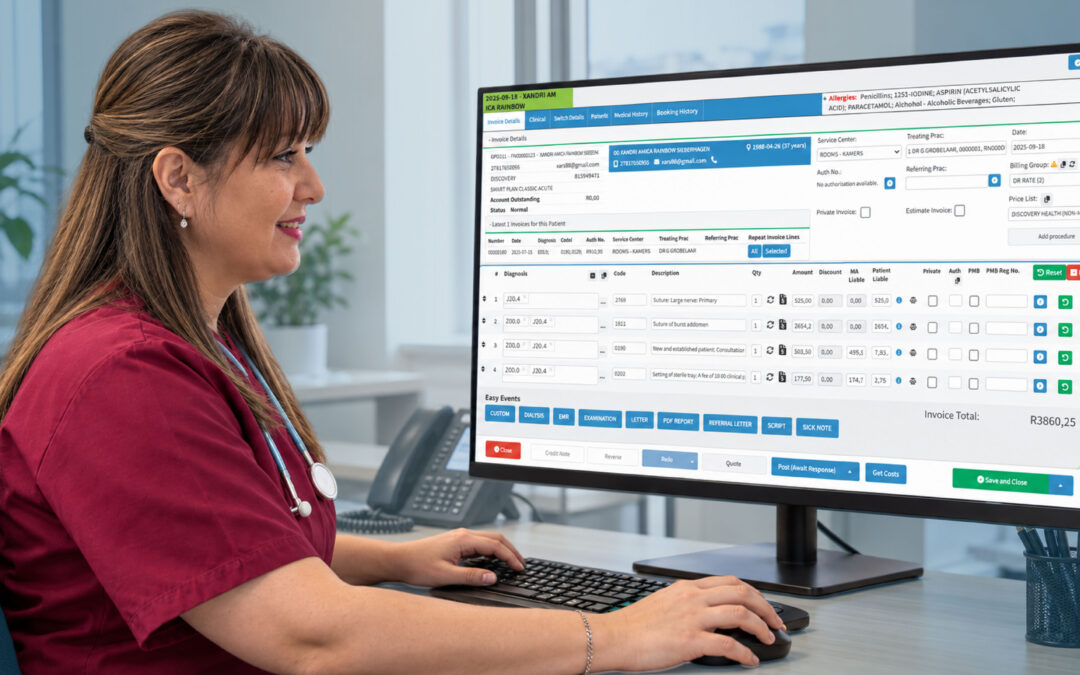
Beyond provincial public billing, many Canadian ophthalmology practices also handle private billing for services not covered by provincial plans. Some patients seek enhanced services like premium intraocular lenses during cataract surgery, or they may be uninsured. Software must manage mixed billing environments, distinguishing between publicly funded and private transactions, while maintaining accurate records for financial reporting and tax purposes.
Integration with Diagnostic Equipment
Modern ophthalmology depends on sophisticated diagnostic equipment. OCT machines produce high-resolution cross-sectional images of the retina and optic nerve, essential for diagnosing and monitoring conditions like age-related macular degeneration and diabetic retinopathy. Visual field analysers generate detailed maps of peripheral vision, critical for glaucoma management. Fundus cameras capture detailed photographs of the retina, and A-scan biometers measure axial eye length for cataract surgery calculations.
When practice management software integrates with these devices, it can automatically import diagnostic data into the patient record, eliminating manual transcription. A well-designed integration establishes a direct data link from the equipment to the electronic health record, ensuring that measurements and images are timestamped, linked to the correct patient, and impossible to misplace or misfile. This integration also enables software to flag significant changes in measurements that might warrant clinical attention.
Software that lacks equipment integration forces practices to manage diagnostic data through external systems or manual entry. This creates information silos where clinical decision-making cannot draw on complete, integrated patient data. The result is slower clinical workflows, increased documentation burden on clinicians, and higher risk of missing important clinical changes.
Practice Management Software for Canadian Ophthalmology Workflows
Scheduling for Complex, Multi-Step Care Pathways
Scheduling in ophthalmology is fundamentally different from scheduling in other specialties. A patient undergoing cataract surgery requires an initial pre-operative assessment, the surgical procedure itself, and a series of post-operative follow-ups at prescribed intervals.
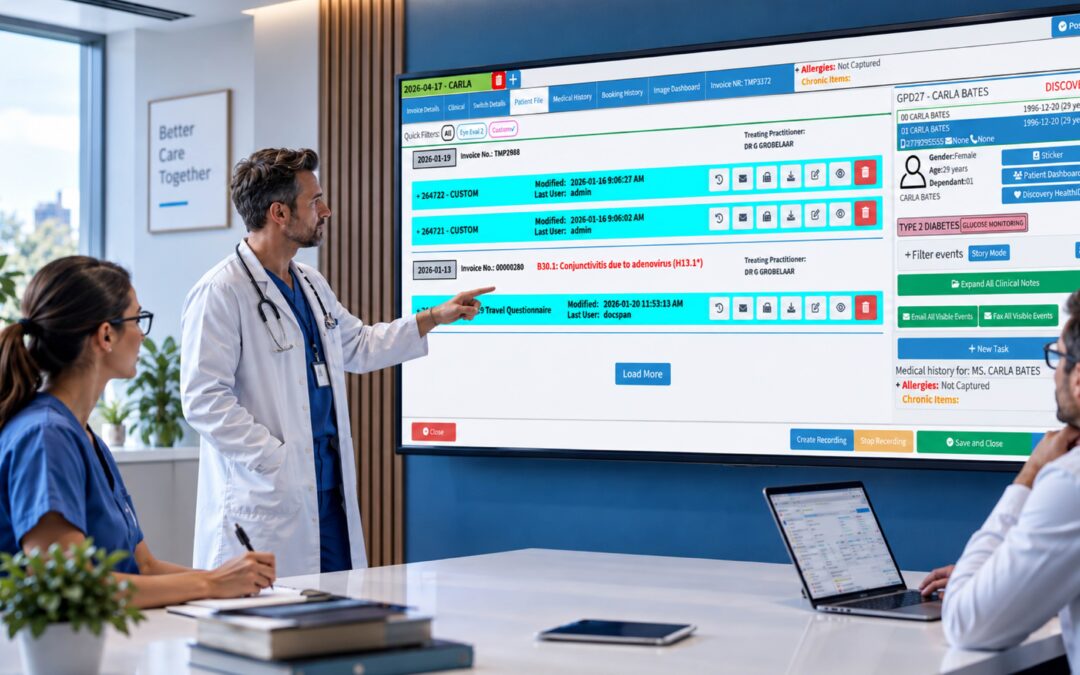
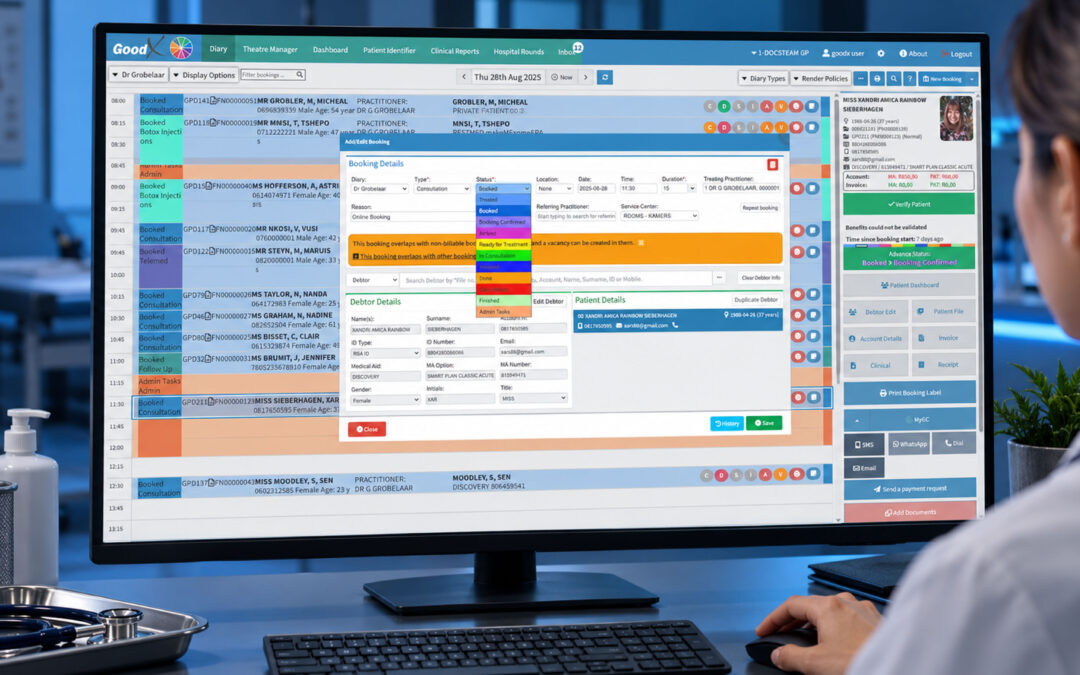
Good practice management software handles this complexity through template-based scheduling that creates entire care pathways with a single action. When a surgeon marks a patient as booked for cataract surgery, the system automatically generates the required pre-operative appointment, reserves theatre time, and schedules the post-operative follow-up visits. This prevents gaps in the pathway, ensures resources are appropriately allocated, and gives practice managers a clear overview of patient flow.
Specialist referrals and consultations add another layer. Some patients are referred for second opinions, specialist investigations, or orthoptic assessment. Software that supports ophthalmology must allow flexible scheduling of different appointment types with different durations and resource requirements. Integration with professional bodies like the Canadian Medical Association helps practices stay aligned with national professional standards for scheduling and follow-up intervals.
Clinical Documentation and Patient Records
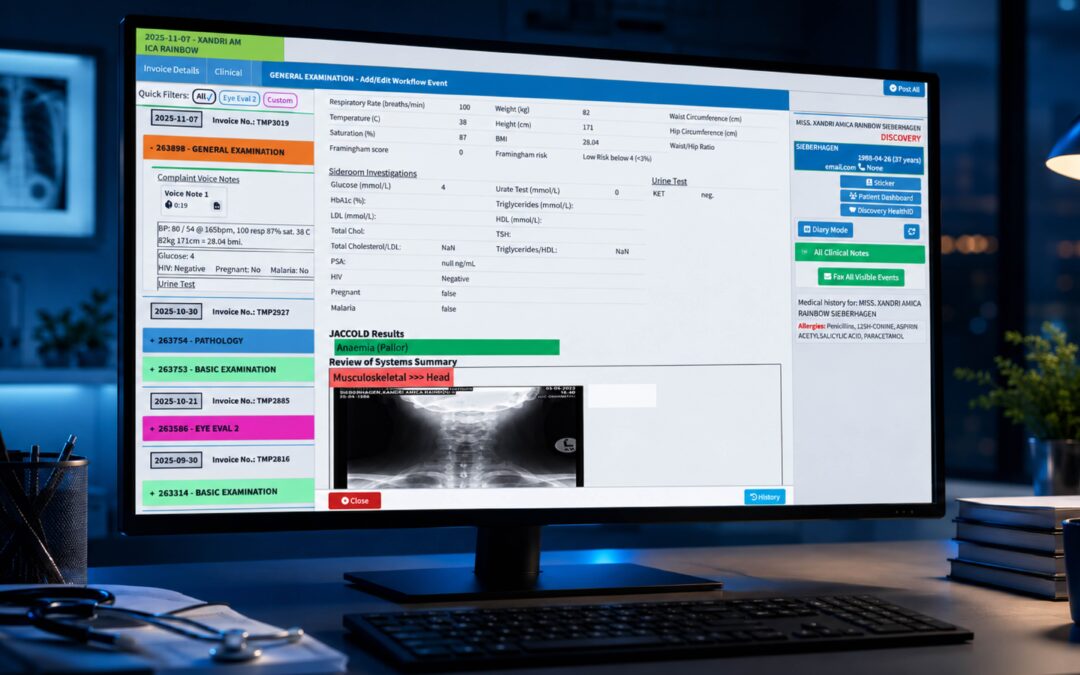
Electronic patient records in ophthalmology must capture specialized data elements that are less commonly documented in other medical specialties. Visual acuity measurements, intraocular pressure readings from different measurement methods, detailed findings from dilated eye examination, descriptions of pathology observed during slit-lamp examination, and records of surgical procedures all require structured documentation. Templates within the software help clinicians document consistently and completely.
Longitudinal tracking is critical in ophthalmology. Patients with glaucoma are followed for decades, with regular monitoring of intraocular pressure and visual field changes. Diabetic patients require periodic retinal examination and OCT imaging to detect early signs of diabetic retinopathy. Post-cataract patients may be followed for years to assess refractive outcomes and late-onset complications. Electronic records allow clinicians to instantly access historical measurements and trends, supporting informed clinical decision-making and enabling early detection of significant changes.
Optical Dispensary and Ancillary Services
Many Canadian ophthalmology practices operate an integrated optical dispensary, selling prescription eyewear to patients. This creates a dual workflow: the clinical examination produces a glasses prescription, which then flows to the dispensary where it is used to order frames and lenses tailored to the patient. Inventory management is required for frames and lenses, financial tracking is needed for dispensary sales, and patient communication must coordinate between clinical and retail functions.
Software that separates these functions forces staff to manually transfer prescription information and prevents real-time visibility into patient orders and inventory. Integrated software creates a single patient record that captures both clinical and dispensary information, allowing a single practitioner to manage the complete patient experience from clinical examination through optical dispensing and follow-up care.
What Canadian Ophthalmology Practices Should Look for in Software
Regulatory Compliance and Patient Privacy
Canadian healthcare practices operate under strict privacy and data protection regulations. PIPEDA (Personal Information Protection and Electronic Documents Act) applies federally, and provinces maintain their own privacy legislation. Additionally, provincial health information acts impose specific requirements on how practices handle patient health information and how they manage access to records. Non-compliance can result in regulatory penalties and loss of patient trust.
Practice management software must enforce role-based access controls, audit logging of all record access, and secure data transmission and storage. When evaluating software, practices should verify that the vendor has undergone privacy impact assessments and can demonstrate compliance with PIPEDA and relevant provincial requirements. The Office of the Privacy Commissioner of Canada publishes guidance on privacy obligations that healthcare providers should reference when assessing software solutions.
Data security is equally critical. Patient health information is highly sensitive and a valuable target for cyber criminals. Software solutions should employ encryption for data in transit and at rest, maintain regular security updates, and undergo independent security audits. Practices should also have clear agreements in place regarding data ownership, backup procedures, and data retention policies.
Cloud-Based Software for Multi-Location Eye Care Practices
Many Canadian ophthalmology practices operate across multiple clinic locations. A surgeon might hold clinics at a primary facility on certain days and at a satellite location on others. Support staff, administrative functions, and billing operations may be centralized. Cloud-based software provides a unified platform accessible from any location, allowing clinicians at different sites to access the same patient records and enabling centralized administration.
Cloud platforms eliminate the need for on-site IT infrastructure, complex local server management, and data synchronization challenges that plague multi-location practices using legacy on-premise systems. Staff can log in from any internet-connected device, maintaining consistent workflows across locations. Billing, reporting, and inventory management can be centralized while still serving multiple patient care locations. Cloud platforms also simplify disaster recovery and business continuity planning, as data is maintained in geographically distributed data centers.
Support and Implementation for Specialist Practices
Implementing practice management software in a specialist ophthalmology practice is not a simple data migration project. Ophthalmology workflows are complex and practice-specific. The software must be configured to match the unique scheduling patterns, billing requirements, and clinical documentation protocols of the practice. This requires deep vendor expertise in ophthalmology operations, not just generic healthcare IT knowledge.
Quality onboarding and post-implementation support are essential. Practices should seek vendors who provide dedicated implementation teams, comprehensive staff training, and ongoing technical support. The vendor should have experience implementing systems in similar practices and be able to share best practices from other ophthalmology deployments. Ongoing support ensures that as the practice evolves, the software can be adjusted and optimized to continue serving the practice effectively.
Frequently Asked Questions
What practice management software is best for ophthalmology in Canada?
The best practice management software for Canadian ophthalmology practices combines provincial billing support, diagnostic equipment integration, complex scheduling capabilities, and optical dispensary management in a configurable platform. Look for software with strong provincial health billing functionality, robust data privacy compliance features, and a vendor who understands the specific administrative needs of specialist eye care practices. Multi-location support, cloud-based architecture, and comprehensive onboarding are important for practices planning to scale.
How do ophthalmology programs in Canada use digital patient records?
Canadian ophthalmology programs use electronic patient records to track longitudinal data including visual acuity, intraocular pressure, imaging results, surgical history, and prescription records. Digital records support continuity of care for patients managed over many years for chronic conditions like glaucoma, and enable data sharing between clinic locations and referring practitioners within a compliant privacy framework. Structured data entry and integrated diagnostic equipment data ensure that records are complete, accurate, and immediately accessible to decision-makers.
What billing features do Canadian ophthalmology practices need?
Canadian ophthalmology practices need billing software that supports provincial health insurance plan codes, handles mixed billing environments, and manages optical dispensing invoicing. Because billing codes and fee schedules differ across provinces, ophthalmology practices should select software with strong local billing expertise and up-to-date provincial fee schedule support. The software should also produce reports that help practices track billing compliance and manage revenue accurately.
How does practice management software support patient scheduling in ophthalmology?
Practice management software supports ophthalmology scheduling by managing complex, multi-step care pathways including pre-operative assessments, theatre scheduling, post-surgical follow-ups, and orthoptic monitoring. Good software allows different appointment types with appropriate durations and resource requirements, sends automated reminders to patients, and gives practice managers a clear view of clinical capacity across the full schedule. Template-based scheduling ensures that care pathways are consistent and complete, reducing the risk of missed follow-up appointments.
Can ophthalmology software integrate with diagnostic imaging equipment?
Yes, advanced practice management platforms can integrate with ophthalmic diagnostic equipment including OCT devices, visual field analysers, and fundus cameras. Integration typically involves structured data import from device output files into the patient record, reducing manual data entry and ensuring that diagnostic results are captured accurately and linked to the correct patient history. This integration improves both clinical safety and operational efficiency, eliminating manual transcription errors and supporting timely clinical decision-making.
Elevate Your Ophthalmology Practice with GoodX
GoodX is a comprehensive practice management platform used by specialist healthcare providers including eye care practices internationally. Built with the unique needs of specialist practices in mind, GoodX Canada combines flexible scheduling, multi-location support, provincial billing configuration, and patient record management in a single cloud-based platform. Whether you operate a single clinic or manage multiple practice locations across provinces, GoodX adapts to your workflows rather than forcing your practice to adapt to generic software. Ready to explore what GoodX can do for your ophthalmology practice?