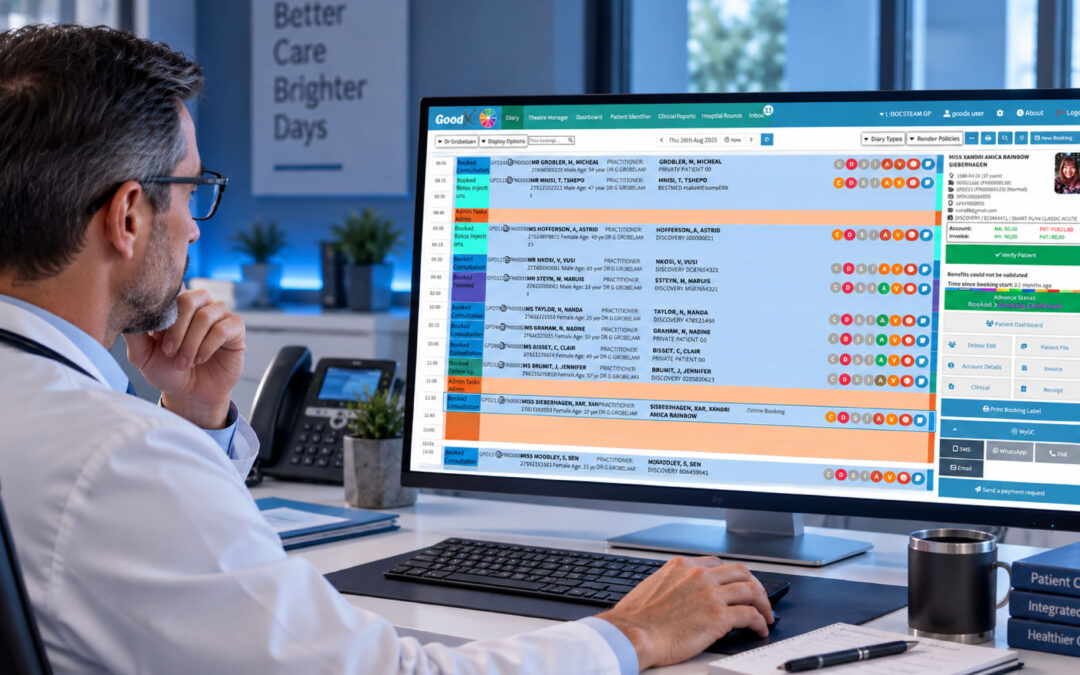
Medical practices run on two parallel systems: clinical care and financial management. When those systems fail to communicate, revenue slips through the cracks. Medical billing accounting software bridges this gap, giving healthcare providers a unified view of clinical activity and financial performance. Whether you run a solo GP practice or a multi-specialty clinic, understanding what to look for in this software can determine whether your practice remains financially healthy.
The global healthcare industry is under increasing pressure to do more with less. Rising operating costs, complex funding schemes, and growing patient volumes mean that financial inefficiency is no longer just an inconvenience. It is a threat to practice viability. The right billing and accounting platform does not just process invoices. It gives you control over your revenue cycle from the first consultation to the final payment reconciliation.
What Is Medical Practice Billing Software?
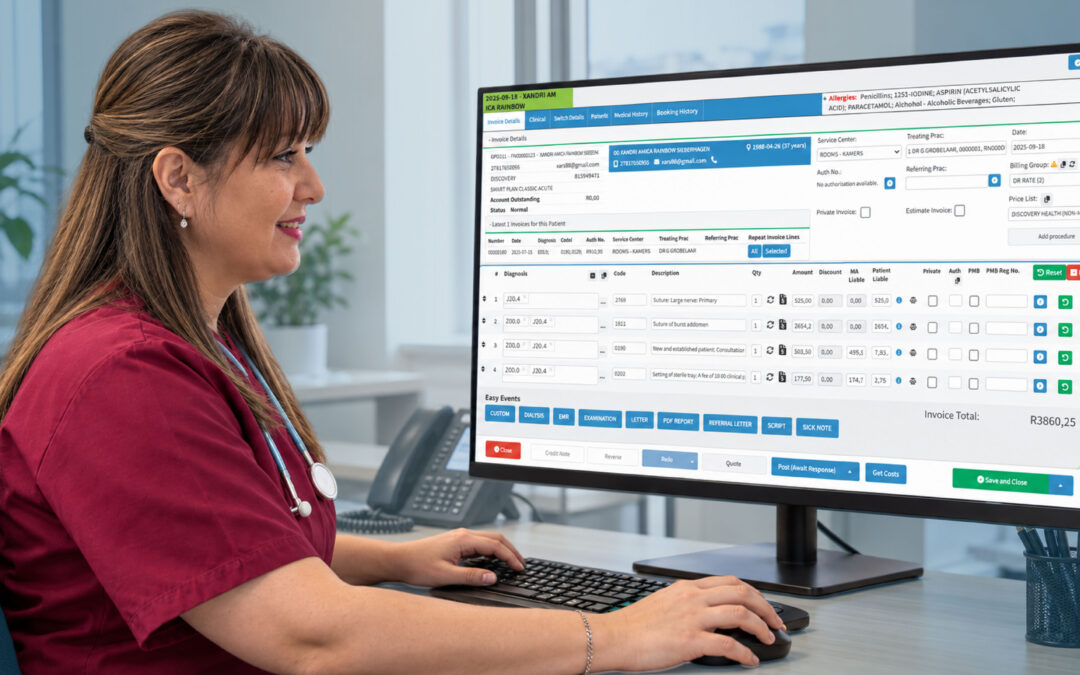
Medical practice billing software handles the full revenue cycle from the moment a patient is seen to the moment payment is confirmed. It translates clinical services into standardised codes, submits claims to medical aids or insurers, and reconciles payments against outstanding invoices. Unlike general accounting platforms built for non-healthcare businesses, medical practice billing software is purpose-built for healthcare. It understands procedure codes, diagnosis codes, tariff schedules, and the specific rules that govern medical billing across different countries and funding bodies.
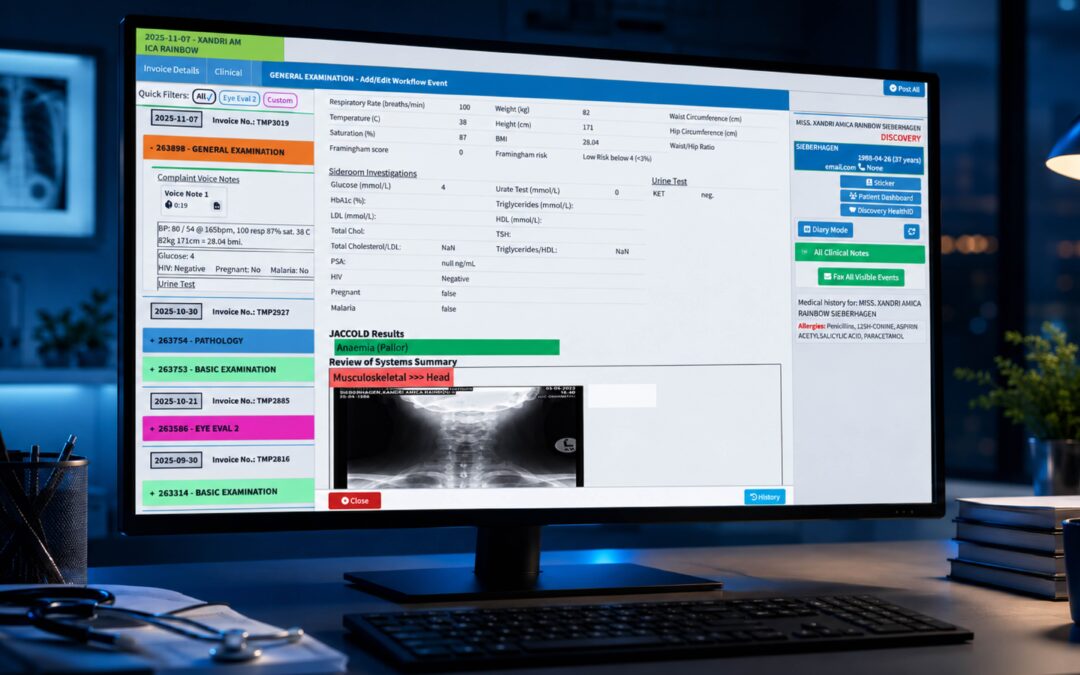
The most effective platforms also integrate billing with the clinical side of the practice. When billing flows directly from clinical records, the risk of transcription errors drops significantly. Staff spend less time re-entering data and more time on tasks that directly support patient care and practice growth.
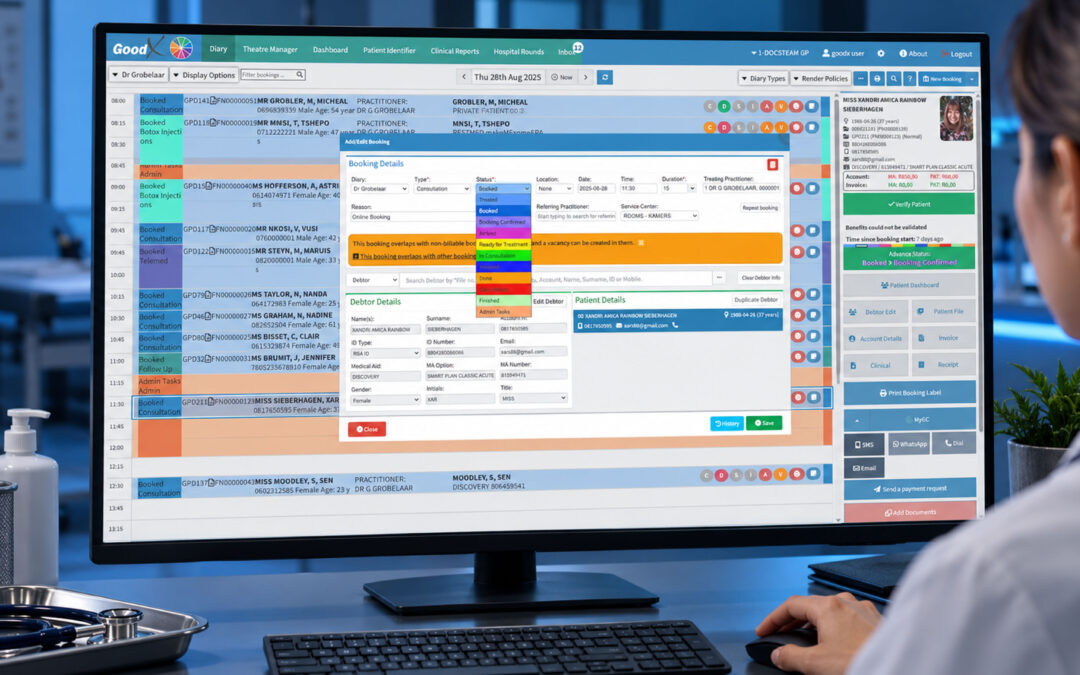
The answer to what software is most frequently used by medical practices varies by country and practice size, but the common thread is a platform that handles scheduling, billing, clinical notes, and financial reporting in one place. Fragmented systems that require separate tools for each function create reconciliation headaches and increase the risk of billing discrepancies.
How Medical Aid Claims Software Reduces Billing Errors
Billing errors are expensive. A single rejected claim can take days or weeks to resolve, and if the denial rate across the practice is high, cash flow suffers in ways that compound over time. Medical aid claims software reduces errors at the point of submission rather than after the fact, which is where the real efficiency gains come from.
Modern claims software validates each claim against the relevant medical aid’s rules before it leaves the practice. This pre-submission validation catches missing information, duplicate submissions, and coding mismatches. The result is a higher first-pass acceptance rate, which means faster payment and lower administrative overhead for your billing team.
The World Health Organization has consistently highlighted the importance of accurate, efficient health financing systems in sustaining healthcare access. In markets where medical aid schemes are the dominant payment mechanism, practices that submit clean claims outperform those that rely on manual correction processes after the fact.
Good claims software also provides aging reports, which show outstanding claims by age. When a medical aid delays payment beyond a defined threshold, the system flags the claim for follow-up. This removes the guesswork from accounts receivable management and ensures that no claim is quietly forgotten while cash flow erodes.
Will AI Replace Medical Billers?
It is a question that surfaces regularly in medical practice circles. The short answer is that AI will reshape the role of medical billers substantially, but it is unlikely to eliminate it entirely in the near term. The nuance matters, because the wrong answer leads practices to either dismiss AI tools prematurely or make premature staffing decisions.
AI tools are already being applied to medical billing in practical ways. Natural language processing can convert clinical notes into billing codes with a high degree of accuracy. Machine learning models can predict which claims are likely to be denied based on historical patterns and flag them for human review before submission. These are genuine productivity gains, not marketing promises.
According to the American Medical Association, AI-assisted billing tools are showing real promise in reducing administrative burden and improving claim accuracy. However, the nuanced judgements required when handling complex cases, appeals, billing disputes, and patient queries still benefit significantly from human oversight and contextual understanding.
For most practices, the realistic outcome is a hybrid model. AI handles high-volume, repetitive coding and claim submission tasks, while billing professionals focus on exception handling, patient communication, and strategic revenue cycle management. This model reduces cost without removing the human judgment that complex billing scenarios require.
The key consideration when evaluating AI-enabled billing tools is not whether they replace staff, but whether they are calibrated for your specific regulatory and funding environment. A billing engine built for one insurance market may not translate well to the tariff structures and medical aid rules in a different country.
What to Look for in Medical Billing Accounting Software
When evaluating platforms, practices should assess several factors. Integration depth matters most. A platform that connects billing directly to clinical records eliminates double-entry and reduces the risk of coding mismatches at the source. If your billing team is manually transcribing clinical information into a separate billing system, you are already accepting unnecessary error risk.
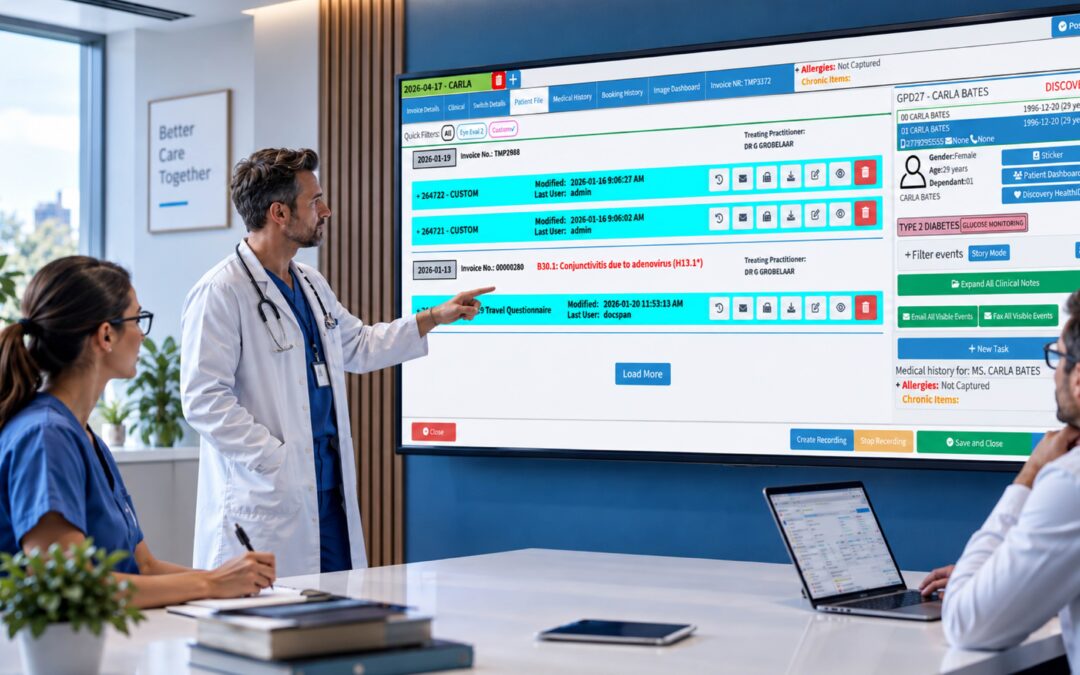
Reporting capability is equally important. A practice needs to see its revenue cycle from multiple angles: claim volumes, denial rates, outstanding balances, and average days to payment. Platforms that offer customisable dashboards with real-time data give practice managers the visibility they need to identify problems early and manage performance proactively.
GoodX is designed specifically for healthcare practices and provides an integrated approach to practice management, billing, and financial reporting. The platform is used across multiple international markets and is built with an understanding of how medical billing and coding works in different funding environments.
Compliance with local tariff structures and medical aid rules is non-negotiable. Practices operating in regulated markets need software that is updated as rules change. The HPCSA and equivalent regulatory bodies in other countries have specific requirements around billing accuracy and record-keeping. Software that supports these requirements actively reduces compliance risk rather than leaving it to individual practitioners to manage manually.
Finally, support matters more than most practices realise until something goes wrong. When a billing issue arises mid-month, you need a support team that understands healthcare billing rules, not just software troubleshooting in the abstract.
Frequently Asked Questions
What is medical billing accounting software?
Medical billing accounting software is a platform that manages the full financial workflow of a healthcare practice, from claim submission to payment reconciliation and financial reporting. It differs from general accounting software by incorporating healthcare-specific coding standards, tariff schedules, and medical aid or insurance billing rules that generic platforms do not support.
How does medical practice billing software improve cash flow?
By automating claim submission and validating claims before they are sent, medical practice billing software reduces denial rates and speeds up payment cycles. Integrated aging reports ensure outstanding claims receive timely follow-up. Together, these features improve average days to payment and stabilise monthly cash flow across the practice.
What software is most frequently used by medical practices?
The most widely used platforms combine practice management, clinical records, and billing in a single integrated solution. Preferences vary by market, but practices consistently prefer systems that handle scheduling, clinical notes, claims, and financial reporting without requiring separate tools that must be manually reconciled against each other.
Can medical billing software handle claims in multiple countries?
Some platforms are designed for multi-market operation and support the billing rules of multiple funding bodies and tariff systems. If your practice operates across borders or serves patients under different funding schemes, confirm that the software vendor actively maintains compliance updates for each relevant market you operate in.
Will AI replace medical billers?
AI is reshaping billing workflows by automating coding and claim validation, but human oversight remains important for complex cases, appeals, and patient queries. Most practices will move toward a hybrid model where AI handles routine submissions and billing professionals manage exception cases, disputes, and relationship-sensitive billing matters.
Ready to Simplify Your Medical Billing and Accounting?
Medical billing accounting software that integrates claims, financials, and clinical records is no longer optional. It is the foundation of a financially sustainable practice. GoodX gives international practices all of this in one platform built specifically for healthcare.