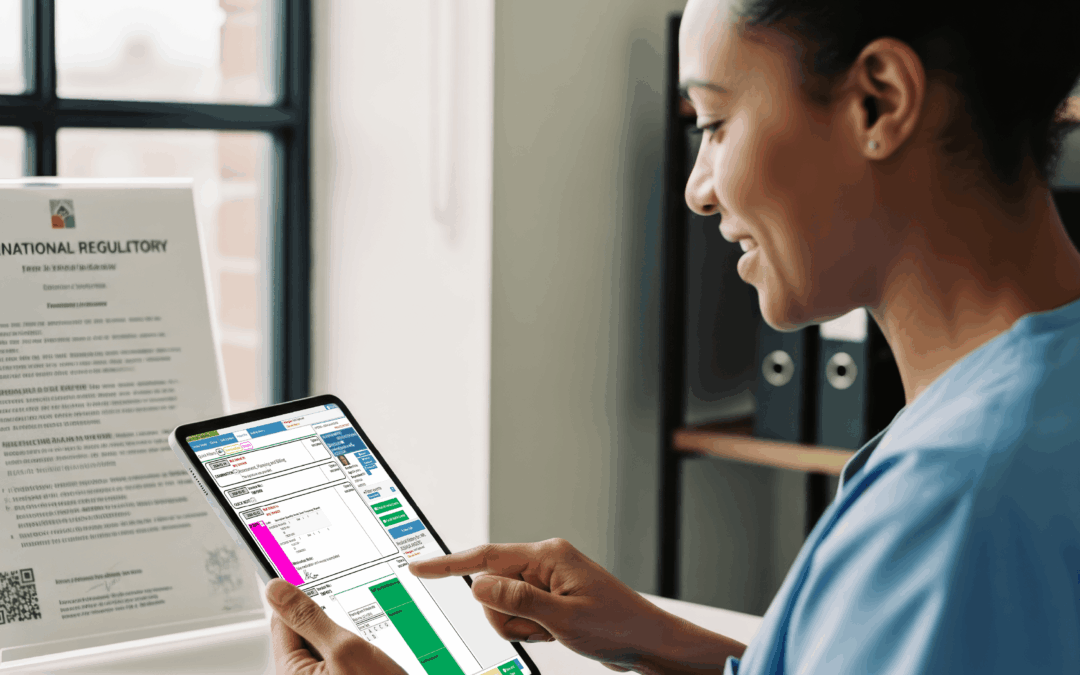
Behind every patient consultation sits an invisible financial engine. Clinical codes translate care into revenue, claims move between practices and funders, and every rejected submission chips away at margins. Software for medical billing and coding is the tool that holds this engine together. For practices operating across borders, scaling up from solo operation, or simply tired of chasing unpaid claims, the platform choice can shape financial health for years.
Billing and coding work has become more technical, rule-driven, and time-sensitive. Coding standards continue to evolve, payer requirements multiply across jurisdictions, and patient expectations around clear itemised invoices keep rising. The right software does not just push paperwork through a queue. It validates claims before they leave the practice, flags the ones about to time out, and frees clinical teams to focus on the work only they can do.
Why Modern Practices Cannot Operate Without Medical Billing Software
The move away from paper-based billing was completed in most developed healthcare markets more than a decade ago, yet many practices still run fragmented digital setups. One system handles scheduling, another captures clinical notes, a third processes invoices, and a fourth tries to reconcile payments. Each handover introduces error. Each silo slows cash flow and creates room for revenue leakage that is almost impossible to trace.
Integrated software for medical billing and coding closes those gaps. When a clinician codes a consultation, the claim is automatically prepared, validated, and queued for submission. When the payment arrives, it is matched against the original invoice without manual intervention. The compounding effect across hundreds of monthly consultations is measurable in working capital and recovered staff hours.
According to the World Health Organization, the efficiency of health financing systems directly influences access to care. Practices that recover revenue quickly can reinvest in equipment, training, and patient services. Practices that bleed revenue through denials and write-offs cannot, regardless of how busy their clinical schedules look on paper.
Best Medical Billing Software for Small Practices
Small practices carry a disproportionate administrative burden. A three-clinician GP surgery does not have the back-office depth of a hospital group, yet it must comply with the same payer rules, coding standards, and audit requirements. The best medical billing software for small practices accounts for this reality by automating the tasks that would otherwise consume a full-time billing coordinator.
Look for a platform that offers pre-submission claim validation, automated follow-up on outstanding claims, and clean integration with clinical records. Cloud-based deployment is almost always the right choice for smaller practices, because it removes the need for on-site servers and keeps the software current without an IT team. The National Institute for Health and Care Research has documented how technology-enabled workflows support sustainability in small practice settings, and the principles translate to markets worldwide.
Ease of use matters more than feature count. If the billing manager has to sit through three days of training to use a new feature, adoption will be slow and the full value will never be realised. Demo any shortlist with the actual staff who will use the tool every day, not only the practice owner who signs the contract.
What Is the Most Used Medical Billing Software?
There is no single global answer, because dominant platforms vary sharply by country and healthcare model. In North America, cloud-first platforms have taken significant market share from legacy desktop vendors over the last decade. In parts of Europe, public sector integration requirements push practices toward systems that speak directly to national health record services. In Southern Africa, medical aid integration is the defining requirement.
What unites the most widely adopted platforms is coverage across the full revenue cycle, not just claim submission. The most used software handles scheduling, clinical notes, coding, claim submission, payment reconciliation, and financial reporting in one environment. Buyers increasingly reject point solutions because the integration overhead of stitching them together consumes the savings they were supposed to deliver.
Interoperability also matters. A platform that can exchange data with laboratories, imaging providers, and pharmacies through standard formats is more valuable than a closed ecosystem, even if the closed one scores marginally higher on feature checklists. The HL7 International standards body sets the global benchmarks for health data exchange, and serious platforms align with them rather than inventing proprietary workarounds.
What Are the Top 5 Denials in Medical Billing?
Denial management is where poor software shows its weaknesses most clearly. The top five denials across most markets look remarkably similar, and each is preventable with the right technology in place.
- Missing or invalid patient information: This accounts for a large share of denials. A digit off in a medical aid number or an expired scheme membership will bounce a claim. Strong software validates member details at the point of scheduling.
- Coding errors: Mismatched diagnosis and procedure codes remain a perennial problem. The transition to ICD-11 and ongoing updates to national coding systems create room for error. Software that checks code validity in real-time eliminates this class of rejection.
- Duplicate claim submissions: These happen when fragmented systems cannot see each other. The same consultation can be billed twice if the practice runs parallel workflows.
- Lack of medical necessity documentation: This trips up claims that are clinically valid but administratively incomplete. The software should prompt clinicians to capture the supporting notes at the point of care.
- Timely filing failures: These penalise practices that let claims age past the payer window. A good platform tracks the clock on every claim and escalates anything approaching its deadline.
Getting Software Selection Right the First Time
The cost of switching platforms is high, which is why the selection decision deserves real investment. Build a shortlist of three vendors at most. Insist on real data demos using anonymised cases from your own practice. Speak to reference customers who run similar specialties and patient volumes. Confirm data ownership, export formats, and termination terms before signing anything.
For international practices that need a platform built for medical billing and financial management in one environment, explore the GoodX General Practitioner Medical Software offering as a reference point for what a fully integrated system looks like in daily use.
Frequently Asked Questions
What does software for medical billing and coding actually do?
It manages the full revenue cycle from appointment booking through to payment reconciliation. The platform captures clinical services, translates them into standardised codes, submits claims to funders, and tracks each claim until it is paid or resolved.
How does medical billing software reduce denials?
Good platforms validate patient details, coding accuracy, and timing rules before claims leave the practice. Pre-submission checks stop the most common denial triggers, and automated follow-up keeps outstanding claims moving.
Can small practices afford the best medical billing software?
Yes. Modern cloud platforms scale pricing with practice size, so small practices can access enterprise-grade functionality without enterprise-grade overhead.
What is the most used medical billing software globally?
Usage varies by country, but the most widely adopted platforms cover scheduling, coding, claims, and reconciliation in one environment.
Should billing software integrate with clinical records?
Integration is essential. The best platforms combine clinical and financial workflows in a single database. This eliminates transcription errors and ensures every billable service is captured at the point of care.
Ready to Transform Your Practice?
Ready to see what a fully integrated billing and coding platform can do for your practice? GoodX brings scheduling, clinical notes, coding, claims, and financial reporting together in one place.