EMR vs EHR Systems: Key Differences Explained
Choosing the right digital system for managing patient information can feel confusing, especially when the terms EMR vs EHR systems are often used interchangeably. While both are designed to replace traditional paper-based records with digital information, they are not quite the same in terms of their purpose, scope, and approach to sharing information.
For healthcare practices, understanding that difference can make it easier to assess what a system actually needs to do—not just what it is called.
In this guide, we explain the difference between EMR and EHR systems, how each supports healthcare professionals, why data sharing matters, and what practices should consider when choosing an electronic record system.
What Is an EMR?
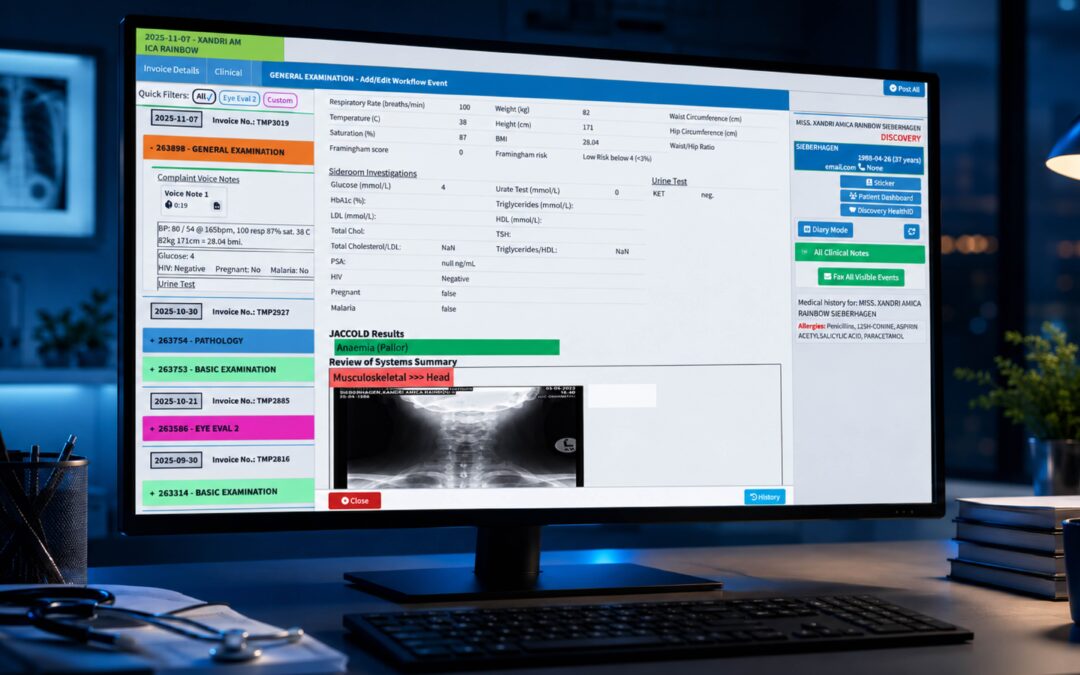
An electronic medical record (EMR) is essentially a digital version of the paper medical chart traditionally kept by a healthcare practice.
Instead of a clinician reaching for a physical folder containing treatment notes, medication information, diagnoses, and test results, that information can be stored and accessed electronically.
An EMR may contain information such as:
- Diagnoses
- Medications
- Treatment plans
- Clinical notes
- Laboratory results
- Patient information
- Health measurements and trends
For clinicians, one of the practical advantages is being able to track a patient’s information over time. A healthcare professional may, for example, review previous measurements or identify when a patient is due for a follow-up appointment.
The focus is generally on supporting medical care and documentation within a particular practice or organisation.
That distinction is important when looking at EMR vs EHR systems because the scope of the information—and how easily it can move beyond the organisation—can be different.
What Is an EHR?
An electronic health record (EHR) takes the concept of an electronic medical record further.
Rather than focusing primarily on information held within one practice, an EHR is designed to support a broader picture of a patient’s health and facilitate information sharing between authorised healthcare providers.
Imagine a patient who visits a doctor, has blood tests performed at a laboratory, receives an X-ray at an imaging centre, and later sees a specialist.
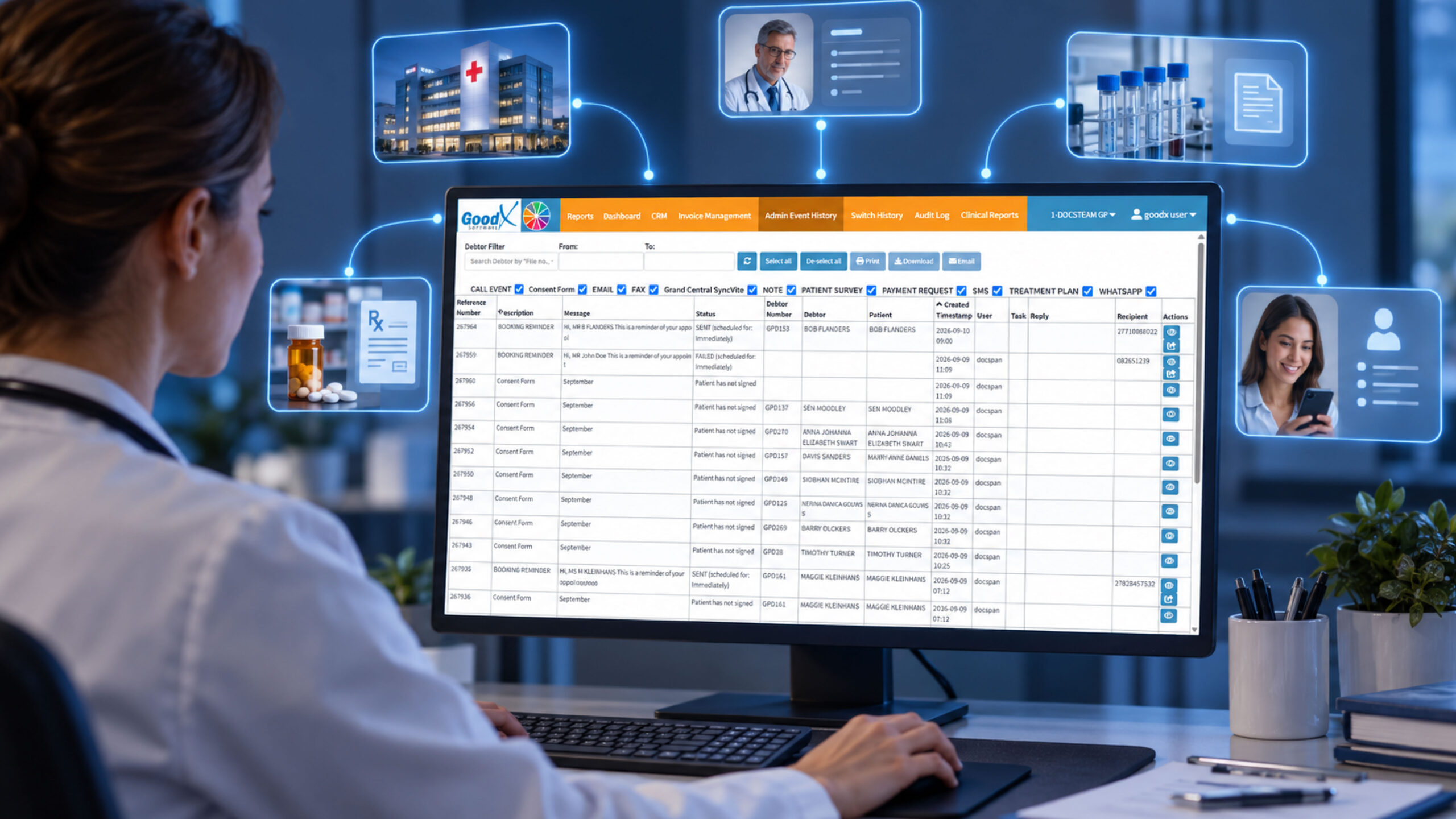
An EHR can bring information from these different points of care together, helping authorised healthcare professionals access a more complete picture of the patient’s health.
EHRs can also provide patients with access to their information through patient portals, depending on the system.
This broader approach is one of the key distinctions when comparing EMR vs EHR systems.
EMR vs EHR Systems: What’s the Difference?
The easiest way to understand the difference is to think about scope and information sharing.
An EMR generally focuses on the medical record within one practice or organisation.
An EHR has a broader purpose. It is designed to support the exchange of information between authorised healthcare providers and different care settings.
| EMR | EHR |
| Primarily focused on a practice or organisation | Designed for a broader view of patient health |
| Supports electronic medical documentation | Supports broader health information exchange |
| Helps clinicians manage records within their environment | Helps authorised providers access information across settings |
| Can track patients over time | Can support continuity as patients move between providers |
| May have limited external information sharing | Places greater emphasis on interoperability and information sharing |
There is an important caveat, though.
The terms EMR and EHR are frequently used interchangeably. The terminology alone does not necessarily tell you exactly what a particular software platform can do.
That is why healthcare practices should look beyond the label and examine how the system works in everyday clinical situations.
Why Does the Difference Matter?
At first glance, the distinction between an EMR and an EHR might seem technical.
In practice, it can have a direct impact on how healthcare professionals access information and coordinate care.
Consider what happens when a patient moves between healthcare providers.
If relevant information remains inside one practice’s system, another provider may need to request the records separately. Historically, this could involve printing and physically transferring documentation.
An EHR is designed to make this broader exchange of information easier when compatible systems and appropriate sharing arrangements are in place.
That can matter when healthcare involves several professionals or organisations.
The difference can affect:
- Clinical workflows
- Care coordination
- Information accessibility
- Patient experience
- Continuity of care
- Data management
For a healthcare practice, the question is therefore not simply, “Do we need an EMR or an EHR?”
A better question is:
How does our practice need patient information to move through the healthcare journey?
EMR vs EHR Systems and Data Sharing
Data sharing is one of the clearest areas where the traditional distinction between EMR and EHR becomes visible.
An EMR may primarily contain information generated by a particular healthcare practice. The information can be extremely useful to the clinicians working there, but it may not automatically be available to another healthcare organisation.
An EHR is intended to support broader information exchange.
For example, if a patient sees several healthcare professionals, having access to relevant information from different sources can provide a more complete view of their health.
This is particularly important when care involves specialists, laboratories, imaging providers, or other healthcare organisations.
However, it is worth remembering that having an EHR does not automatically mean every healthcare system can exchange information seamlessly.
Compatibility and integration still matter.
For this reason, practices evaluating healthcare software should consider the actual connectivity offered by a system rather than relying solely on whether the vendor calls it an EMR or EHR.
GoodX and the Bigger Picture of Digital Healthcare
This is also where the conversation becomes more practical for healthcare practices using systems such as GoodX.
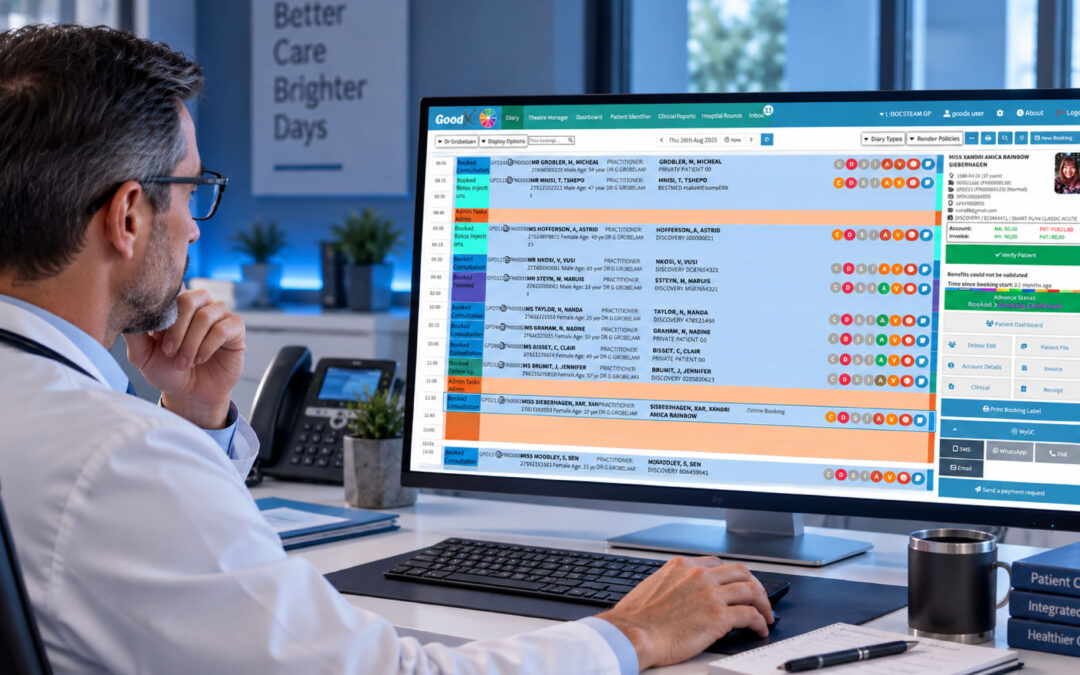
The value of electronic healthcare software is not simply that patient information is stored digitally. What matters is how naturally that information fits into the way a healthcare professional works.
A clinician should not have to think constantly about where information is stored, how to document a consultation, or how different parts of the practice’s workflow fit together.
The underlying principle is simple: technology should support the practice rather than become another obstacle between the clinician and the patient.
For a practice considering GoodX or reviewing its existing electronic record environment, the EMR vs EHR distinction provides useful context. Rather than focusing only on terminology, practices can look at the broader questions:
- How is patient information recorded?
- How easily can clinicians access relevant information?
- How does the system support everyday documentation?
- Does information need to be shared with other providers?
- How does the technology fit into existing workflows?
- What happens when a patient’s care involves more than one healthcare provider?
These questions are often more useful than simply asking whether a platform is technically an EMR or an EHR.
What Information Is Stored in EMR and EHR Systems?
Both types of electronic record systems can contain substantial amounts of patient information.
Depending on the particular system and healthcare environment, this may include:
- Patient demographics
- Diagnoses
- Medications
- Allergies
- Treatment plans
- Clinical notes
- Laboratory results
- Immunisation information
- Test results
- Billing-related information
The important difference is not necessarily the type of information stored.
Instead, it is often about how that information is used, accessed, and shared.
An EMR may provide the information a healthcare professional needs within a particular practice, while an EHR is designed to support a broader health record that can follow the patient across authorised healthcare settings.
Why Accurate Patient Data Matters
No matter which system a practice chooses, the quality of the information entering the system matters.
Paper records can create obvious challenges. Handwriting can be difficult to read, documents can be misplaced, and information may have to be manually transferred from one source to another.
Digital systems can reduce some of these problems by making information easier to store and access electronically.
But technology cannot make inaccurate information accurate.
If incorrect information enters an EMR or EHR, it can still affect the quality of the patient’s record.
That makes accurate patient data an important part of any digital healthcare strategy.
The objective isn’t simply to collect more information. It is to maintain information that healthcare professionals can rely on.
EMR vs EHR Systems: Which One Is Better?
There isn’t a universal answer.
An EHR isn’t automatically “better” simply because it has a broader definition, and an EMR isn’t necessarily inadequate because it focuses on a particular healthcare environment.
The right choice depends on the needs of the practice.
A specialised healthcare provider that primarily works within one environment may have different requirements from a practice that regularly works with specialists, laboratories, imaging centres, and other providers.
When comparing systems, consider:
1. Your clinical workflow
Does the software make documentation straightforward?
The system should fit naturally into how clinicians actually deliver care.
2. Your information-sharing requirements
Does your practice regularly need to exchange patient information with other healthcare providers?
If so, connectivity and interoperability become particularly important considerations.
3. Patient access
Do patients need access to information through a patient portal or another digital interface?
This can be another factor when comparing different solutions.
4. Your existing technology
A new healthcare system does not operate in isolation.
Consider how it fits with the technology already being used by your practice.
5. Future requirements
Healthcare practices change over time. A system that works today should ideally be evaluated against where the practice is heading as well.
Can an EMR Connect With Other Healthcare Systems?
Yes.
An EMR can connect with other healthcare technologies through mechanisms such as interfaces, APIs, health information exchanges, or other integration methods.
However, the level of connectivity varies from one system to another.
This is why the traditional distinction between EMR and EHR should not be treated as an absolute technical rule.
Some EMR systems can have integration capabilities, while the practical interoperability of an EHR depends on the systems and organisations involved.
For practices evaluating platforms such as GoodX, it makes sense to consider the actual workflow and integration requirements of the practice, rather than making a decision based purely on terminology.
EMR vs EHR Systems and Patient Care
Ultimately, electronic records exist to support healthcare.
An EMR can help clinicians document care, manage patient information, and track a patient’s medical history within their practice.
An EHR can extend that approach by helping authorised healthcare providers share information and maintain greater continuity as patients move between care settings.
Both have an important role.
The more healthcare becomes connected across providers and organisations, the more important it becomes for information to be available when and where it is needed.
At the same time, technology should not create unnecessary complexity.
A system that requires clinicians to constantly switch between tools, repeat information, or work around inefficient processes can create friction—even if the underlying technology is sophisticated.
That is why usability and workflow matter alongside functionality.
Frequently Asked Questions About EMR vs EHR Systems
What does EMR stand for?
EMR stands for electronic medical record.
What does EHR stand for?
EHR stands for electronic health record.
What is the main difference between EMR and EHR systems?
An EMR generally focuses on a patient’s medical record within a particular practice or organisation. An EHR is designed to support a broader health record and information exchange across authorised healthcare settings.
Are EMR and EHR the same thing?
The terms are often used interchangeably, but they traditionally have different meanings. EMRs tend to focus on medical records within a particular organisation, while EHRs emphasise broader information exchange and continuity of care.
Is an EHR better than an EMR?
Not necessarily. The right system depends on the practice’s workflows, specialties, interoperability needs, technology environment, and relationships with other healthcare providers.
Can an EMR connect with other systems?
Yes. EMRs can connect with other healthcare systems using technologies such as APIs, interfaces, and health information exchanges. The exact level of connectivity depends on the system.
Can patients access information in an EHR?
EHRs can support patient access through patient portals, depending on the system and how it has been implemented.
What information can an EMR or EHR contain?
Electronic records can include diagnoses, medications, allergies, treatment plans, clinical notes, test results, immunisation information, demographic information, and billing-related information.
Final Thoughts: EMR vs EHR Systems
The debate around EMR vs EHR systems is ultimately less about which acronym sounds better and more about how healthcare information is used.
An EMR traditionally focuses on maintaining an electronic medical record within a practice or organisation. An EHR takes a broader approach, supporting information exchange and continuity between authorised healthcare providers and care settings.
For healthcare practices, that distinction can be useful when evaluating software—but it shouldn’t be the only consideration.
The more important question is whether the technology supports the way your team actually works.
That means looking at documentation, accessibility, data accuracy, information sharing, patient access, interoperability, and everyday clinical workflows.
For practices considering or using solutions such as GoodX, this provides a useful framework for thinking about electronic healthcare records without getting caught up in terminology alone.
Because at the end of the day, the goal isn’t simply to have an electronic record.
The goal is to have useful information available when healthcare professionals need it, in a system that supports rather than complicates the delivery of care.
Contact our team to book your free GoodX demo.
Disclaimer: This article is provided for general informational and educational purposes only. While GoodX Software takes reasonable care to ensure that the information is accurate and current at the time of publication, laws, regulations, industry standards, healthcare policies and technology may change. The content should not be regarded as medical, legal, financial or other professional advice. Readers should verify information relevant to their circumstances and consult an appropriately qualified professional where necessary. GoodX Software accepts no responsibility for decisions made or actions taken solely on the basis of this content.