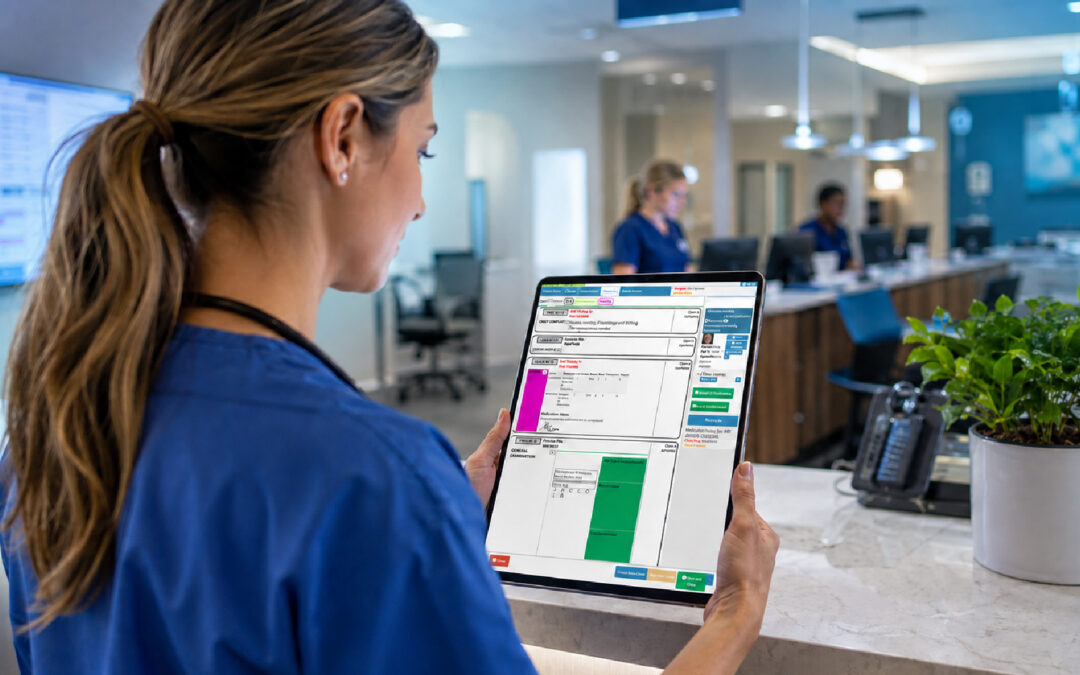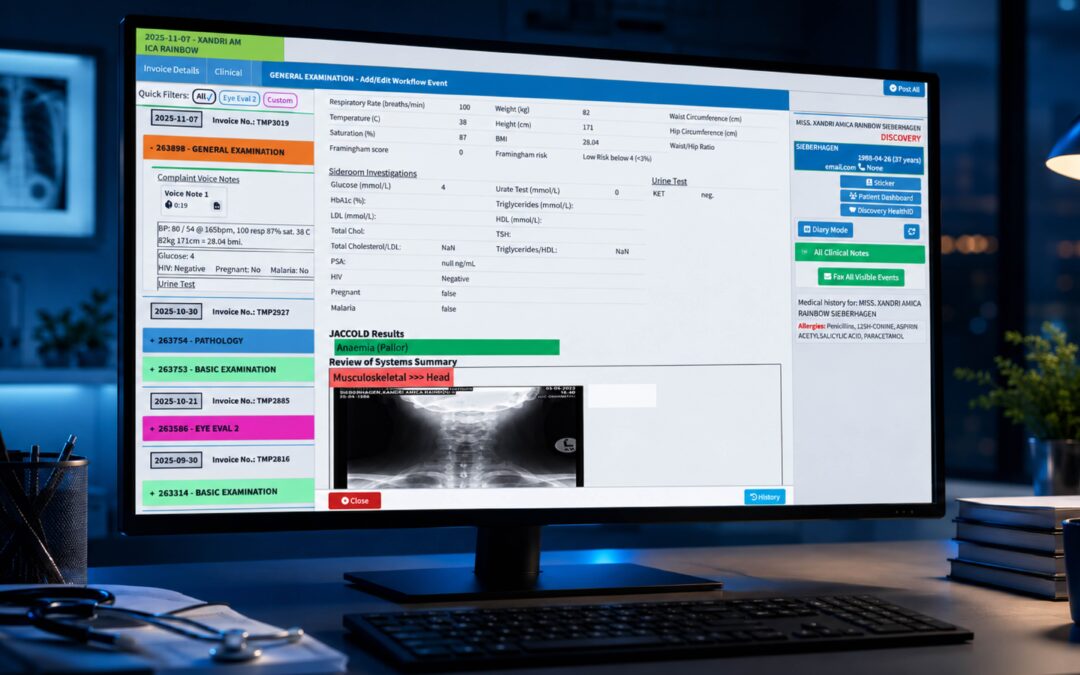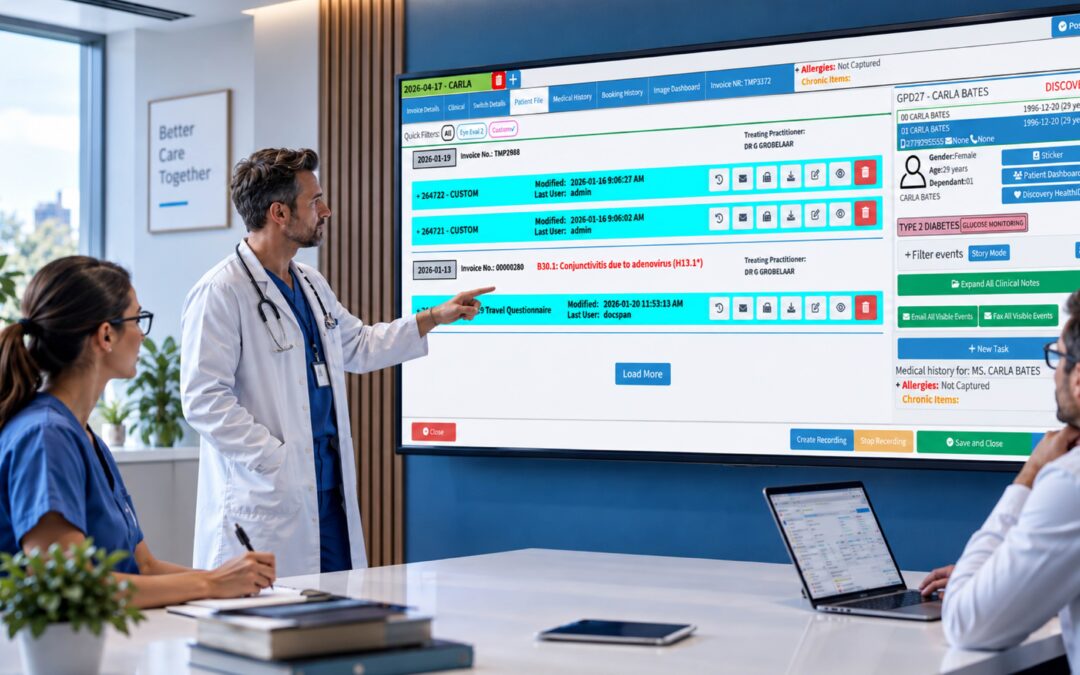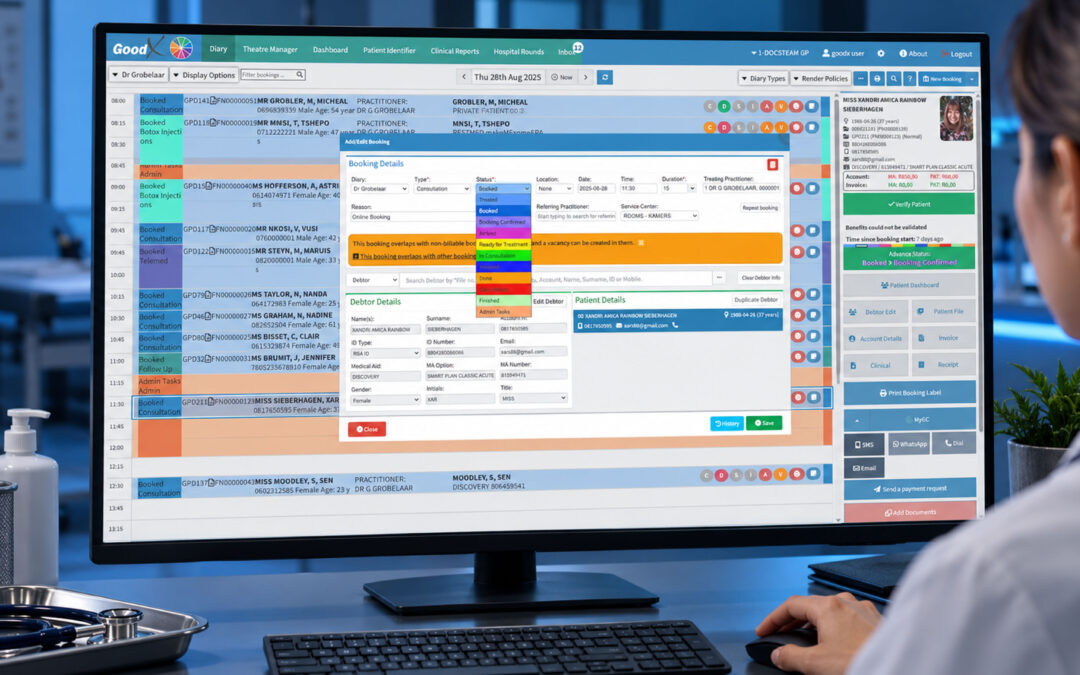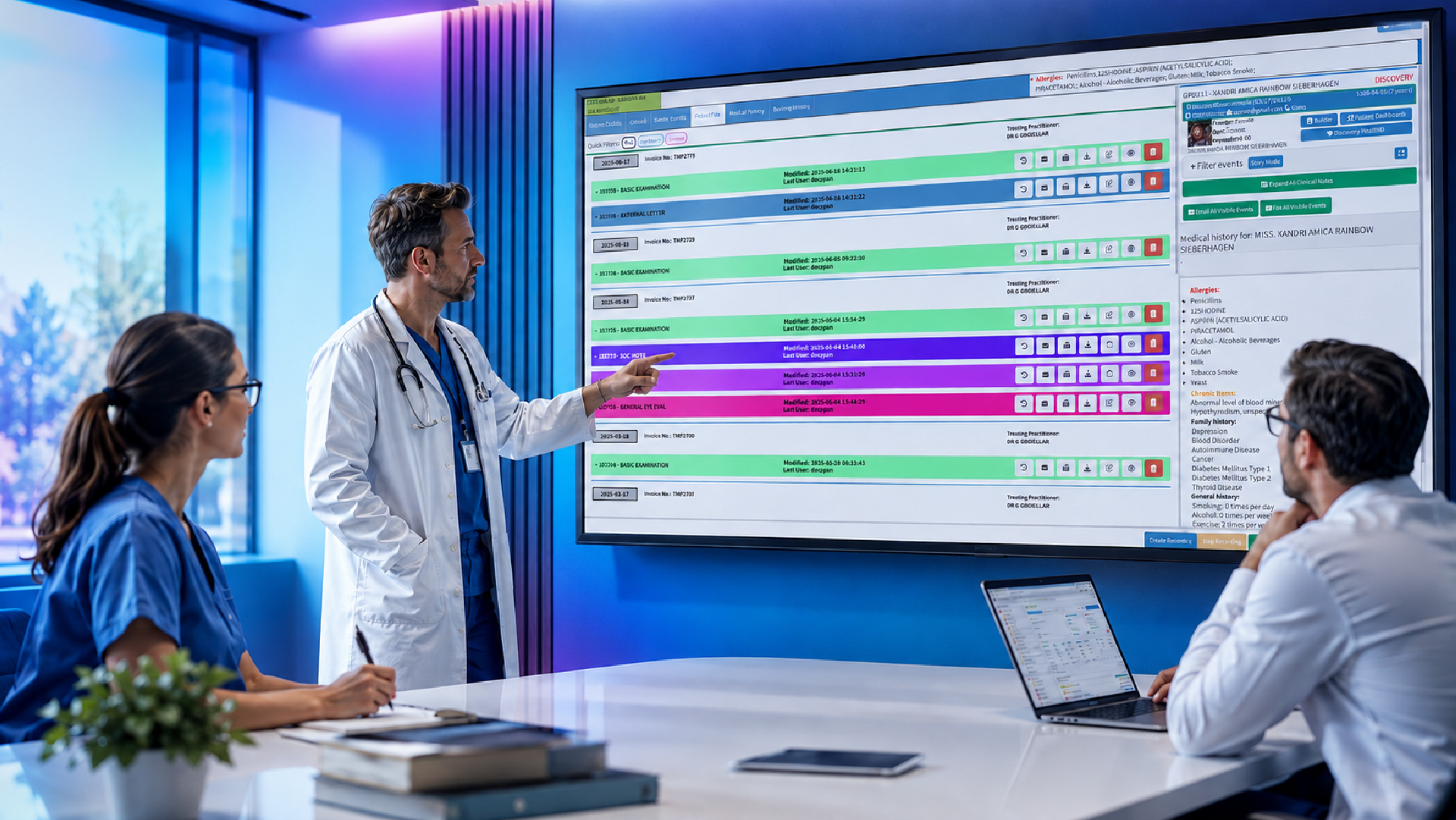
Healthcare generates an enormous amount of information every day. Patient histories, diagnoses, medications, clinical notes, test results, images, billing information and treatment plans all need to be recorded, accessed and managed.
For years, much of this information was kept in paper files. Today, healthcare providers increasingly rely on digital systems to organise and manage patient information.
At the centre of this shift is the electronic medical records database.
An electronic medical records database provides a structured digital environment for storing patient information and making it available to authorised healthcare professionals. But its value goes beyond replacing a filing cabinet. When implemented effectively, electronic medical records can improve access to information, support clinical workflows, reduce administrative work and give healthcare organisations better visibility into their operations. Research into EMR implementation in outpatient settings has identified benefits including improved communication, work efficiency, care processes, safety, patient-centred care and data accessibility.
For practices considering a new EMR system, however, the database itself is only part of the picture. How information is captured, organised, accessed, protected and integrated with other systems can have just as much impact.
What is an electronic medical records database?
An electronic medical records database is the digital infrastructure used to store and organise information contained within electronic medical records.
An EMR can be thought of as the digital version of a patient’s medical chart. Instead of relying on physical files, healthcare professionals can record and retrieve information electronically. Modern EMRs can contain clinical information as well as information supporting administrative processes, coding and billing.
Depending on the system and healthcare setting, an electronic medical records database may contain:
- Patient demographic information
- Medical history
- Diagnoses
- Medications
- Allergies
- Clinical notes
- Treatment information
- Laboratory results
- Medical images
- Procedures
- Vital signs
- Billing and coding information
- Appointment information
- Documents and forms
The database gives the healthcare organisation a central place to manage this information rather than relying on separate paper records or disconnected files.
However, simply storing information electronically doesn’t automatically make a system effective.
The database needs to be designed around the way healthcare professionals actually work.
How does an electronic medical records database work?
At a basic level, an electronic medical records database receives information from different parts of the healthcare workflow, stores it in a structured format and makes it available to authorised users when required.
Consider a typical patient visit.
A patient arrives at a practice and their information is confirmed. The healthcare professional records the consultation, adds diagnoses and documents treatment. If tests are performed, the results can be added to the patient’s record. Prescriptions, follow-up instructions and other relevant information can also become part of the record.
Instead of creating a new physical file for every interaction, the information becomes part of the patient’s ongoing electronic record.
This means that the next authorised healthcare professional accessing the record can see relevant historical information without having to search through physical documents.
That continuity is one of the fundamental advantages of moving from paper records to electronic systems.
What information is stored in an electronic medical records database?
The exact information depends on the healthcare provider, specialty and software platform.
However, most comprehensive systems organise information around the patient’s care journey.
Patient information
This can include basic demographic and contact information, identification details and other information needed to correctly identify and manage the patient.
Medical history
The database can maintain information about previous illnesses, diagnoses, procedures, medications and other relevant medical history.
Clinical documentation
Healthcare professionals can document consultations, assessments, treatment plans and other clinical information directly within the system.
Diagnostic information
Depending on the system’s integrations, information from laboratory investigations, imaging and other diagnostic services may be recorded or made accessible through the patient’s electronic record.
Medication information
Current and historical medications can form part of the patient record, helping healthcare professionals understand previous and ongoing treatment.
Administrative and billing information
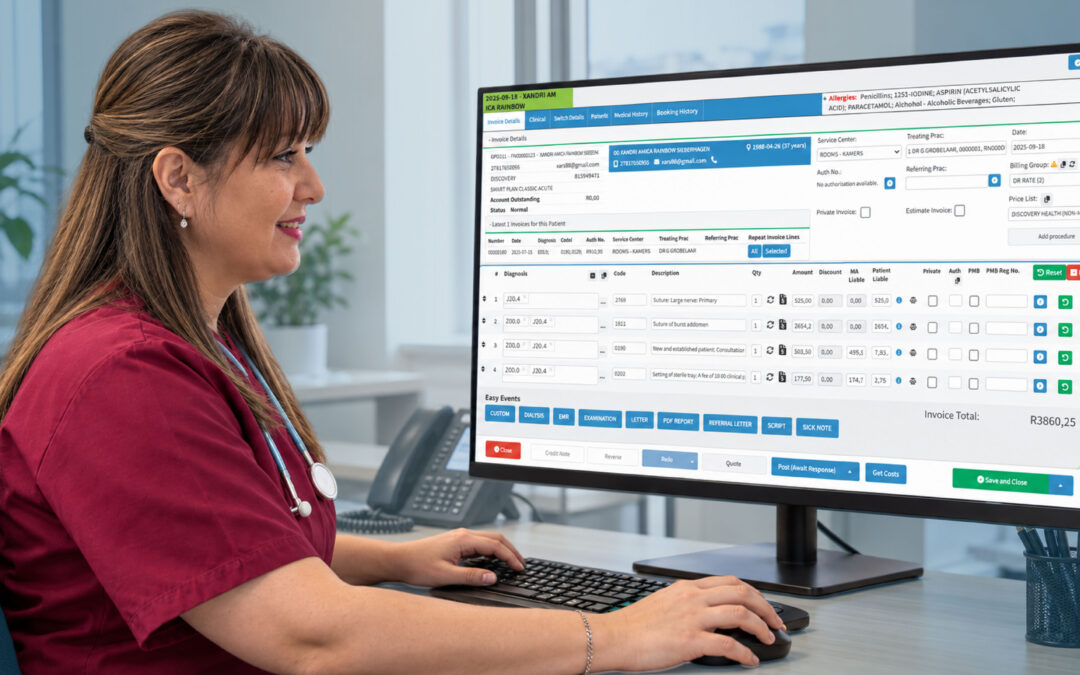
An EMR doesn’t necessarily exist separately from the administrative side of healthcare. Modern electronic records can include fields and workflows supporting coding, billing and other administrative requirements.
This is particularly important for practices looking for a connected healthcare platform rather than a system that only stores clinical notes.
Why an electronic medical records database matters
The value of a database isn’t simply that it can hold more information than a filing cabinet.
The real advantage is how that information can be used.
Paper records can be difficult to locate, share and update. They can also be lost or damaged. Electronic records provide authorised users with a digital way to retrieve patient information when they need it.
Oracle Health notes that moving from paper charts to EMRs has supported improvements in efficiency, accuracy and safety, while the resulting data can also be used to support analysis and healthcare decision-making.
For a healthcare practice, that can translate into practical benefits.
Faster access to patient information
Staff don’t have to search through physical files to find a patient’s history.
Better continuity
Relevant information can remain available as the patient returns for future consultations.
Less physical paperwork
Digital documentation can reduce reliance on paper forms and physical storage.
More structured information
Electronic systems can use standardised fields and templates, making information easier to capture consistently.
Improved administrative workflows
Information can support processes such as coding, billing and reporting without requiring separate paper-based workflows.
An electronic medical records database can improve workflow
One of the biggest reasons healthcare organisations adopt EMRs is to improve the way work gets done.
But implementation isn’t automatically successful.
A 2024 scoping review of EMR implementation in outpatient settings identified improvements in communication and reporting, work efficiency, care processes, healthcare outcomes, safety and patient-centred care among the potential direct benefits. It also identified data accessibility, staff satisfaction, decision-support use and financial performance as potential indirect benefits.
The important point is that these benefits depend on how the system is implemented and used.
A poorly designed EMR can create additional work.
A well-designed system can remove unnecessary steps.
That distinction matters when evaluating an electronic medical records database.
EMR database vs paper medical records
The difference between electronic and paper records goes beyond where information is stored.
| Paper medical records | Electronic medical records |
| Physical files | Digital records |
| Manual searching | Electronic search and retrieval |
| Physical storage required | Digital storage |
| Difficult to access remotely | Can support authorised digital access |
| Information may be difficult to share | Can support electronic information exchange |
| Handwritten information can be difficult to interpret | Structured digital information |
| Manual updates | Electronic updates |
| Physical duplication may be required | Digital copies and sharing can be supported |
This doesn’t mean that every electronic system is automatically better.
If information is poorly structured, difficult to find or locked away in systems that cannot communicate with each other, many of the potential benefits can be reduced.
That is why database design, usability and interoperability matter.
What is the difference between an EMR and an EHR?
Electronic medical records (EMRs) and electronic health records (EHRs) are often used interchangeably, but there is an important distinction.
An EMR is generally associated with the patient’s record within a particular healthcare practice or organisation.
An EHR is designed to support a broader view of the patient’s health information across different healthcare professionals, departments or care settings.
Oracle describes EMRs as generally being maintained within an individual practice or hospital, while EHRs are designed to make information available across relevant members of a patient’s care team and different care environments.
In practical terms, the distinction often comes down to how widely the information can be shared and integrated.
That is why practices shouldn’t evaluate an electronic medical records database solely on its storage capabilities.
They should also consider how it connects with the wider healthcare environment.
Why interoperability matters
A patient rarely interacts with only one healthcare professional throughout their lifetime.
They may see a general practitioner, specialist, pharmacist, laboratory, imaging provider or hospital.
If every organisation keeps information in a completely isolated system, creating a complete picture of the patient’s care becomes more difficult.
Interoperability can help address this problem.
An interoperable healthcare environment allows information to move between systems when appropriate, subject to the relevant technical, legal and security requirements.
This can reduce the need for healthcare professionals to manually recreate information that already exists elsewhere.
However, interoperability also introduces complexity.
The EMR implementation literature identifies incompatibility with existing systems and local regulations as one of the barriers organisations can face during implementation.
For this reason, integration should be evaluated before purchasing an EMR solution.
Security and an electronic medical records database
Medical records contain highly sensitive information.
A healthcare organisation therefore needs to consider not only how information is stored but also who can access it, when they can access it and what they can do with it.
Important considerations include:
- User authentication
- Role-based access
- Permissions
- Audit trails
- Data encryption
- Backups
- Secure data transmission
- Disaster recovery
- System monitoring
- Data retention
- Regulatory requirements
Security shouldn’t be treated as a feature that is added after implementation.
It should form part of the system’s design and the organisation’s operating procedures.
Staff training is equally important. Even a technically secure system can be undermined by poor user practices.
Data quality matters as much as data storage
A large database isn’t necessarily a useful database.
If information is incomplete, duplicated, outdated or entered incorrectly, healthcare professionals may struggle to rely on it.
This is why practices should consider data quality when evaluating an electronic medical records database.
A useful system should make it easy for staff to enter information consistently.
Templates, structured fields, validation processes and clear workflows can help reduce inconsistencies.
The implementation research also highlights user-friendliness and alignment with existing workflows as important facilitators of successful EMR adoption.
In other words, the quality of the database is influenced by the quality of the workflow surrounding it.
Electronic medical records databases and reporting
One of the less obvious advantages of digital medical records is that the information can be used beyond individual patient consultations.
Once information is stored electronically, healthcare organisations can potentially analyse it to understand trends and improve operations.
For example, data can contribute to:
- Clinical reporting
- Patient population analysis
- Operational reporting
- Quality improvement
- Research
- Service planning
- Financial analysis
- Healthcare decision-making
Oracle notes that data generated through EMRs can support research and analysis of illnesses, treatments and healthcare practices.
The quality of these insights depends on the quality and structure of the underlying data.
Challenges of implementing an electronic medical records database
Moving from paper records or an older system to a modern electronic medical records database is not always straightforward.
The implementation review identified several challenges, including:
- Financial constraints
- Time constraints
- Technical and design problems
- Limited IT resources
- Inadequate infrastructure
- Increased workload during implementation
- Incompatibility with existing systems
- Regulatory considerations
- Resistance from healthcare professionals
These challenges are important because they demonstrate why purchasing software is only one part of the process.
Implementation needs planning.
How to make EMR implementation easier
A successful implementation starts before the software is installed.
Understand your current workflow
Document how patient information currently moves through the practice.
Where is information captured?
Who uses it?
Where does duplication occur?
Where are delays happening?
Involve the people who will use the system
Doctors, nurses, administrative staff, practice managers and other users may have very different requirements.
Getting their input early can identify problems that might otherwise only appear after implementation.
Provide proper training
Users need to understand not just which buttons to press, but how the new system changes their workflow.
Plan the transition
Data migration, system configuration, integrations and testing should be planned before going live.
Monitor the results
After implementation, look at whether the system is actually improving the problems it was purchased to solve.
The research identifies training, change management, user-friendliness, workflow alignment, management support and sufficient resources as factors that can facilitate successful implementation.
What to look for in an electronic medical records database
When comparing EMR systems, don’t start with a list of impressive features.
Start with your practice.
Ask what the system needs to accomplish.
1. Usability
Can healthcare professionals use it without unnecessary complexity?
2. Structured information
Can information be captured consistently and retrieved easily?
3. Integration
Can the system connect with the other healthcare and administrative systems you use?
4. Security
Does the provider have appropriate security controls and processes?
5. Scalability
Can the system support your organisation as it grows?
6. Reporting
Can you turn stored information into useful operational and clinical insights?
7. Workflow support
Does the software fit the way your team works?
8. Implementation and support
What happens during migration, training and rollout?
These considerations can be more important than the number of features listed on a vendor’s website.
Why the database should not operate in isolation
An electronic medical records database is most useful when it forms part of a connected healthcare environment.
Patient registration, appointments, clinical documentation, billing and reporting are not completely separate processes.
Information captured at one point may be required later by another member of the team.
For example, information collected during registration may support the clinical record. Clinical documentation may contribute to billing. Billing information can contribute to financial reporting.
The fewer unnecessary gaps between these workflows, the less manual work staff may need to perform.
This is where an integrated healthcare platform can provide an advantage over a collection of disconnected tools.
How GoodX approaches electronic medical records
GoodX is designed around the idea that healthcare information should support the people using it rather than becoming another administrative burden.
An electronic medical records database is not valuable simply because it can store large amounts of patient information.
It needs to help healthcare professionals capture, find and use information efficiently.
For a modern practice, that means considering the broader workflow around the record.
Patient information needs to connect with the activities that happen before, during and after a consultation. Clinical documentation, administrative processes and financial workflows all form part of the wider practice environment.
GoodX provides an integrated healthcare technology environment designed to bring these areas together, helping practices manage patient information and the workflows surrounding it from a more connected platform.
For practices considering an EMR solution, the important question is therefore not simply:
“How much information can this database store?”
A better question is:
“How effectively can this system help our team use that information?”
The future of electronic medical records databases
The role of the electronic medical records database is likely to continue expanding.
Healthcare organisations are generating more digital information, and there is increasing demand for systems that can make that information accessible and useful.
Future developments are likely to involve greater use of:
- Automation
- Artificial intelligence
- Data analytics
- Interoperability
- Clinical decision support
- Digital patient services
- Connected healthcare platforms
But technological progress shouldn’t come at the expense of usability.
The implementation research makes this clear: user-friendliness, workflow alignment, training and organisational support are important factors in successful EMR adoption.
The most effective electronic medical records database is therefore not necessarily the one with the most advanced technology.
It’s the one that combines useful technology with a workflow that healthcare professionals can actually use.
Choosing an EMR Database for Long-Term Success
An electronic medical records database is much more than a digital replacement for paper files.
It provides the foundation for storing, organising and accessing patient information throughout the healthcare journey.
When implemented effectively, electronic medical records can support better information access, more efficient workflows, improved communication, safer documentation and more informed decision-making.
But the database itself is only part of the solution.
Healthcare organisations should also consider usability, security, data quality, interoperability, integration, implementation and long-term scalability.
Ultimately, the goal isn’t simply to store patient information digitally.
It’s to make that information useful.
Frequently asked questions
What is an electronic medical records database?
An electronic medical records database is a digital system used to store and organise patient medical information, such as medical histories, diagnoses, medications, clinical notes, test results and other healthcare data.
What information is stored in an EMR database?
Depending on the system, it may contain demographic information, medical histories, diagnoses, medications, clinical notes, laboratory results, medical images, procedures, billing information and other patient-related data.
What is the difference between an EMR and an EHR?
An EMR generally represents a patient’s digital medical record within a particular healthcare organisation, while an EHR is designed to support broader information sharing between different healthcare professionals and care settings.
Are electronic medical records secure?
They can be, provided the system and organisation use appropriate security measures such as authentication, access controls, encryption, monitoring, backups and appropriate data-management practices.
Can an EMR database integrate with other healthcare systems?
Many modern systems support integration with other healthcare technologies. The extent of interoperability varies between platforms, so practices should evaluate specific integrations before choosing a system.
What are the benefits of an electronic medical records database?
Potential benefits include faster access to patient information, improved documentation, reduced paperwork, better communication, more efficient workflows and improved data accessibility. Research has also identified potential benefits for care processes, safety and patient-centred care.
What should a practice consider when choosing an EMR system?
Consider usability, workflow fit, data security, interoperability, integration, reporting, scalability, implementation requirements, training and ongoing support.
Can an EMR database support medical billing?
Many EMR systems can capture or connect with information used for coding and billing. The exact capabilities depend on the platform and its integration with practice management and billing systems.
Is moving from paper records to an EMR difficult?
Implementation can involve challenges such as training, cost, technical issues, infrastructure requirements, workflow changes and staff adoption. Planning, change management and user training can help reduce these difficulties.
Why is data quality important in an EMR database?
Healthcare professionals need accurate and reliable information to make informed decisions. Consistent data-entry processes, structured information and appropriate system design can help maintain the quality of patient records.
Disclaimer: This article is provided for general informational and educational purposes only. While GoodX Software takes reasonable care to ensure that the information is accurate and current at the time of publication, laws, regulations, industry standards, healthcare policies and technology may change. The content should not be regarded as medical, legal, financial or other professional advice. Readers should verify information relevant to their circumstances and consult an appropriately qualified professional where necessary. GoodX Software accepts no responsibility for decisions made or actions taken solely on the basis of this content.